


:quality(80))


:quality(80))


:quality(80))


:quality(80))


Best Rebuy Alternatives for Personalizing Your Ecommerce
:quality(80))
:quality(80))
Read summarized version with
 ChatGPT
  Perplexity
  Gemini
  Claude
  Grok
Grok Key takeaways
Rebuy covers the whole shopping journey. AI and rulesets decide what each shopper sees across product pages, search, the cart, the checkout and after the order. You pay a monthly fee plus a rate on every order, and checkout extensions need Shopify Plus.
The best Rebuy alternatives replace different parts of it. Wisepops covers most in one package: popups, embeds, AI recommendations, an onsite feed and web push, live in days without a developer.
The other three show different strengths. Nosto for product discovery, LimeSpot for reaching people in email and ads, Bloomreach for enterprise scale.
Nothing transfers when you switch. Rules and profiles get rebuilt from scratch.
Switching personalization tools for your ecommerce is not a small decision. Your cart, your product pages and the revenue attached to both are all involved, so it is worth being clear on what you would gain and what you would give up before anyone builds a business case.
This article covers what Rebuy Engine does, and then presents four Rebuy alternatives worth studying. It brings direct examples from Rebuy, so you can make comparisons.
What this article covers:
See your segments
Match each visitor to the right campaign
We review your traffic and show which behavioral segments you have, the campaigns that fit each one, and the revenue they could reach.
:quality(80))
Alternatives to Rebuy you might want to consider
The four tools in this article, and the job each one is bought for:
Tool
Main use case
Why is it worth considering
Wisepops
Conversion of existing traffic through highly personalized targeted messages, including popups, feed, AI recommendations and more.
You want to switch to Wisepops to run recommendations, cart offers and upsells based on real, precise behavioral segments found with a traffic audit. Everything installs from the Shopify app, goes live without theme code, and reports the revenue behind each campaign.
Nosto
Personalizing how shoppers find products, across search results, category pages and recommendations.
You would switch to Nosto to personalize the whole route to purchase, so search results, category pages and recommendations all adapt to what each visitor is looking for.
LimeSpot
Product recommendations and offers driven by a profile that updates as each visitor browses.
You would switch to LimeSpot to reuse the audiences it builds on your site in email, SMS and Google Ads.
Bloomreach
Enterprise and global personalization, running search, site content and marketing from one AI engine across every channel.
You would switch to Bloomreach if you are operating at enterprise or global scale and want to replace a Shopify-only app with a platform that also takes over your search and your email and SMS tools.
of total online revenue influenced by onsite campaigns
Pierre Hardy runs AI product recommendations in popups and an onsite feed, with no discount campaign.
What Rebuy does
Rebuy Engine has a lot of features. We looked at the ones most stores actually use, and here is what they do.
Rulesets that decide what every shopper sees
Rebuy's personalization of your Shopify business can be controlled with rulesets that Rebuy calls data sources. Each rule follows an IF/RETURN structure. The rule checks something, then returns recommended products.
The check can be the product being viewed, what is in the cart, the cart value, the customer's order history, traffic source, date or location. What comes back is either a collection you choose or one of Rebuy's algorithms. Rules run top to bottom, so the last one is usually set to return something for everybody.
The editor shows each rule as a single IF and RETURN pair:
:quality(80))
When a rule returns a collection you also choose how it gets ordered. Smart Sort ranks products by how the whole store buys. Similar Sort ranks them by how close they are to the product being viewed. Smart Sort needs a good number of orders before it produces anything useful, so smaller stores usually get more out of Similar Sort.
Smart Cart
Rebuy replaces your theme's cart with its own slide-out version with personalized features and recommendations.
The default layout stacks recommendations under the cart items:
:quality(80))
You pick a layout at setup. The double column version keeps a separate column for recommendations instead of stacking them under the items.
The same cart in the double column layout:
:quality(80))
The editor is a list of parts you switch on: an announcement bar, a progress bar toward free shipping or a free gift, cross-sells, a discount field, order notes, quantity discounts. Replacing the cart is what lets all of that work together in one place.
Widgets
Widgets are how Rebuy shows recommendations and messages anywhere outside the cart.
Each widget is built from a template and assigned to a placement:
:quality(80))
There are several placements: home page, product page, checkout extensions, post-purchase offer, customer account page and a few more. This is Rebuy's main selling point.
Popup settings for a widget, with triggers and a frequency cap:
:quality(80))
Each widget can sit inline on the page or appear as a popup. Popups can fire on page load, on add to cart, on exit intent or on a form submit, with a delay and a cap on how many times someone sees it.
Checkout extensions
The feature most often called Rebuy's edge is exclusive to Shopify Plus users.
Checkout placements are set up like any other widget:
:quality(80))
There are two widget types here. Recommendations pull products based on the current cart or past orders. Content blocks are images and copy, for shipping information or a brand message rather than an offer.
What to keep in mind about Rebuy Engine
Three things that decide whether Rebuy stays the right fit as you grow:
You pay more as you sell more. Each product has a monthly price, and on top of that Rebuy charges a small amount for every order your store takes. So if your orders double, your Rebuy bill goes up too, even if you are using it in exactly the same way.
Not everything comes in one package. Rebuy is five separate products and you buy them one at a time. Bundles come with the cart product. Search is a different product. A/B testing and landing pages are a third. So if you want the cart and you also want to run tests, that is two purchases.
Shopify only. Rebuy is built for Shopify and nothing else, including headless Shopify setups. If you ever move to another ecommerce platform, it does not come with you.
Wisepops
:quality(80))
Wisepops is a Rebuy alternative because it does the same jobs, product recommendations, cart offers and upsells, without rebuilding your store to do them.
Wisepops integrates natively with Shopify and over 50 other tools including Klaviyo, so you can target your Klaviyo segments on your own store. Everything is delivered through popups, embeds, AI recommendations, an onsite feed and web push in one subscription.
How can Wisepops replace Rebuy Engine?
Show personalized messages based on cart value, source and purchase history. Targeting covers behavior, traffic source and UTM, cart contents, cart value, collections, VIP status, purchase history, URL, device and location, so a deal seeker and a repeat buyer do not see the same message.
Convert first-time visitors on arrival. A popup on arrival with a first-order offer or a set of best-seller picks, so someone landing for the first time gets a reason to stay.
Put the right product in front of them. AI recommendations pulled from your catalog, shown in an embed on the product page as someone browses.
Raise the value of the cart. An embed inside the cart showing complementary products, or a nudge toward free shipping once the cart passes a certain value.
Improve cart recovery rate. Exit intent fires when someone is about to go, and AI cart recovery picks the offer most likely to bring them back in the same session.
Keep returning visitors engaged. An onsite feed with current offers and links, available on every page, that people open when they want it.
Reach people after they have gone. Web push brings them back without needing their email address.
Measure what each campaign earned. The Experiments platform runs A/B tests with a control group and reports the revenue against each campaign, so you find out which campaigns added money.
Getting started begins with a demo, and a strategist reads your traffic before you build anything. The traffic audit sorts your visitors into behavioral segments, sizes each one and matches a campaign to it, so you are not defining audiences from a blank page.
This makes switching from Rebuy or getting started with CRO easier, since new targeting rules are made from your real traffic.
The segments a store tends to find, and the campaign each one gets:
Paid traffic
New from an ad
Arrives from an ad, views one page, leaves.
Campaign
Welcome popup with a first-order offer.
Research
Engaged researcher
Reads several pages in depth, not ready to buy.
Campaign
Embedded form offering a buying guide.
High intent
Cart abandoner
Added to the cart, then left before checkout.
Campaign
Exit-intent reminder of the cart contents.
Repeat visit
Returning browser
Second or third session, still comparing options.
Campaign
Short quiz that recommends a product.
B2B
Company visitor
Lands on pricing pages from a company domain.
Campaign
Embedded demo form on pricing pages.
Loyalty
Repeat buyer
Ordered before, and open to a member perk.
Campaign
Member perk posted in the onsite feed.
The audit reads 7 days of your traffic, then returns your sized segments, the revenue opportunity in each and three to five campaign mockups built for your brand. The full sequence, including what happens on the call, is in how the audit works.
Three of the campaigns running on customer stores, each with the story behind it:
:quality(80))
Emma Sleep
An interest selector ahead of the email field, which raised the subscription rate by 50% against a single-step version.
Read the story →:quality(80))
Nutrimuscle
A three-step popup that collects sport type and training frequency, at a 4.1% signup rate.
Read the story →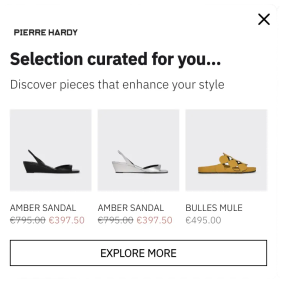
Pierre Hardy
AI product recommendations matched to what each visitor browses, with no discount attached.
Read the story →Cost. A 14-day free trial with full access through the Shopify App Store. No free plan, and pricing scales with pageviews, so a high-traffic store should check the tier first. Above that, a strategist can run the campaigns directly, quoted after the traffic audit.
Best fit. Stores where the problem is quickly activating the traffic you already have. Campaigns go live in days without a developer, and the Experiments platform runs A/B tests with a control group and reports the revenue against each one.
The same campaigns run outside ecommerce, with the targeting built for each case:
Agencies
One account across client sites, with campaigns and reporting separated per store.
Wisepops for agencies →Take a closer look at Wisepops
Rated 4.9 on Shopify and Capterra, and trusted by brands like Pierre Hardy and Emma Sleep.
Nosto
Nosto covers the whole way a shopper finds a product. Search, category pages, recommendations and page content all run off one engine, so what Nosto learns about a visitor follows them around the site. If someone keeps looking at running shoes, the search results, the collection pages and the recommendations all shift toward running shoes.
Recommendations and search sit in the same dashboard:
:quality(80))
How can Nosto replace Rebuy Engine?
Four parts of Rebuy that Nosto takes over:
Personalize how people find products. Search results and category pages reorder per visitor, based on what that person is likely to want.
Recommend products across the store. Home page, product pages and collection pages all run off the same engine, so the logic is consistent wherever someone lands.
Change the content as well as the products. Banners and page content can be personalized by segment and scheduled ahead of a campaign.
Build bundles automatically. Product sets get generated from what customers actually buy together.
Cost. Free to install, but the platform itself is paid and quoted on request. Every setup starts with a sales conversation. Accounts come with a customer success manager, and reviewers often count that person as part of the value.
Best fit. Mid-market and enterprise stores with large catalogs, where the problem is people not finding the right product rather than not finishing checkout.
LimeSpot
LimeSpot builds a picture of each visitor while they browse and uses it to decide which products and offers they see. The useful part is that those audiences do not stay on your site. A group like "viewed outerwear twice and did not buy" can be targeted again in email, SMS or Google Ads.
Recommendation boxes are placed page by page:
:quality(80))
How can LimeSpot replace Rebuy Engine?
Five jobs LimeSpot picks up:
Recommend products where people shop. Product, collection and cart pages, driven by a profile that updates as each visitor behaves.
Push for a bigger basket. A cart progress bar shows what someone unlocks by spending more.
Upsell after the order. Post-purchase offers triggered by what someone just bought.
Adjust the discount to the shopper. Offers change based on how price-sensitive someone looks.
Take the personalization off the site. The same segments can be used in email, SMS and Google Ads.
Cost. Priced on store revenue with a 15-day trial. On Shopify, the free and cheaper tiers are not available to Plus merchants, so Plus stores go straight to the top plan.
Best fit. Small and mid-sized stores, including those not on Plus, that want personalization to reach into email, SMS and paid channels.
Bloomreach
Bloomreach is the widest platform here and the least like Rebuy. Search, email, SMS, WhatsApp, web personalization, ads and a conversational shopping agent all run off one AI engine, with an enterprise CMS alongside.
Every channel is managed from one customer data view:
:quality(80))
How can Bloomreach replace Rebuy Engine?
Four capabilities that go well past what Rebuy does:
Personalize product discovery. Search reads what a shopper means rather than matching keywords, and category pages reorder to match.
Personalize the site itself. Page content and banners change by visitor, managed through its own CMS.
Carry it into every channel. The same customer data drives email, SMS, WhatsApp, ads and the site, so someone sees a consistent offer wherever they meet the brand.
Answer questions as a shopper would ask them. A conversational agent handles product questions and guides people toward a purchase.
Cost. No published pricing and no trial. Quotes are based on catalog size and usage. Expect it to take a while before your team is comfortable with it.
Best fit. Large or global brands running several stores, or planning a platform migration, with the budget and the staff for it. Clients include Red Bull, Pandora, Bosch, Puma and Benefit Cosmetics.
When Rebuy is still the right call
Three cases where none of the four alternatives is a straight swap:
You run subscriptions. Rebuy works with Recharge, Skio and Smartrr, and the Smart Cart can switch a purchase to a subscription in one click.
You have a headless setup. Rebuy publishes SDKs for Hydrogen and other JavaScript frameworks. The other apps here do not.
You need the cart, the checkout and search from one vendor. Rebuy is the only tool here that replaces the cart itself, and it covers checkout and search too.
Summary: Rebuy alternatives depending on what you want to achieve
Match the goal on the left to the tool on the right:
You want more out of the traffic you already have. Wisepops. Popups, embeds, recommendations, an onsite feed and cart recovery in one package, live in days without a developer, with the revenue reported against each campaign. The broadest fit here for most Shopify stores.
You want the personalization to carry on in email, SMS and ads. LimeSpot. The audiences it builds on your site can be used off it, and it works on a standard Shopify plan.
You want shoppers to find the right product in a huge catalog. Nosto. Search, category pages and recommendations all move with what each visitor looks at.
You are a global enterprise and want one platform running every channel. Bloomreach. Search, site, email, SMS and ads off the same customer data, with the budget and the team that implies.
You want offers inside the checkout itself. That needs Shopify Plus whichever tool you pick, so check your plan before it becomes the deciding factor.
Frequently asked questions
Is there a free Rebuy alternative?
Not really. Wisepops has a 14-day trial and no free plan. LimeSpot has free and low-cost tiers, but Shopify Plus merchants cannot use them. Nosto is free to install but the platform is paid and quoted on request. Bloomreach has no trial and no published pricing.
Do I need Shopify Plus for post-purchase upsells?
Not for post-purchase, but yes for offers inside the checkout. Widgets in the checkout steps need Plus, because Shopify only lets apps change the checkout on Plus. The thank-you page, order status page and customer account placements work on a standard plan. If you are not on Plus, in-checkout offers were never available to you anyway.
Can an onsite campaign tool handle cart upsells without replacing the cart?
Yes. Rebuy's Smart Cart replaces your theme's cart drawer so it can put offers inside it. Wisepops embeds those offers into the drawer you already have, as a cross-sell block between the line items and the subtotal, targeted by cart contents, cart value or SKU, with exit intent and same-session recovery behind it.
Will my Rebuy rules transfer to another tool?
No. Rulesets, customer profiles and A/B test history do not move between personalization platforms. You rebuild the configuration and the new engine starts learning your shoppers from scratch. Wisepops does that rebuild for you as a managed migration, with campaigns built in parallel so nothing is switched off before you approve it.
How long before a new personalization tool performs optimally?
Usually a few weeks. Rule-based campaigns can go live immediately, but anything AI-driven needs behavioral and purchase data first. Self-serve tools are usually configured within one to two weeks. Enterprise platforms take a lot longer before the learning period even starts.
What should I measure before switching?
Conversion rate, average order value and revenue per visitor, split by page type. Take the baseline while the old tool is still running, or you cannot prove whether the new one helped.
Which Rebuy alternative works on Shopify without Plus?
Wisepops and LimeSpot both work on a standard Shopify plan. Nosto and Bloomreach will run on one too, but their pricing and setup assume a bigger store, usually one already on Plus.
Get started
in minutes
Start converting more visitors today.
Get started in minutes and see results right after.
