










Best AI agents for ecommerce: one pick per goal [2026]


Read summarized version with
 ChatGPT
 Perplexity
 Gemini
 Claude
 Grok
Key takeaways
Definition: An ecommerce AI agent understands a plain-language request, reads your store data and takes an action toward a goal. Examples include answering a shopper or updating an order.
Types: Shopper-facing agents talk to your customers about products, orders and returns. Merchant-facing agents work for your team on reports, product edits and discounts.
How to choose: Start from your main pain point and check that the agent can read the data it needs. Then compare the cost at your traffic level.
Pricing: Agents bill in different units, including pageviews, unique visitors, tickets, resolved conversations, profiles and credits.
Adoption: Analyst projections cited by Deloitte expect AI agents to enable 25% of global ecommerce sales by 2030.
Measurement: Attributed revenue overstates results. A control group that never sees the agent shows what the agent added.
I started my career at a large ecommerce marketplace 15 years ago. Five million visitors came to the site every month, and the operational work was overwhelming.
Designers built the newsletter by hand, and merchandising went through the creative team too. A 20-person team handled support. We even tried to build our own crowdsourced online sales assistant, and it failed badly.
Almost every one of those jobs now has an AI agent built for it. Deloitte's agentic commerce guide, citing analyst projections, expects AI agents to enable 25% of global ecommerce sales by 2030.
Whether or not that exact figure holds, the agents are already in your admin, your helpdesk and your product pages. The hard part is choosing.
This article explains what ecommerce AI agents are, the jobs they do and how to choose one. Then comes our selection of the best AI agents and tools for ecommerce: one per goal, five in total, plus a bonus.
In this guide:
See your segments
Match each visitor to the right campaign
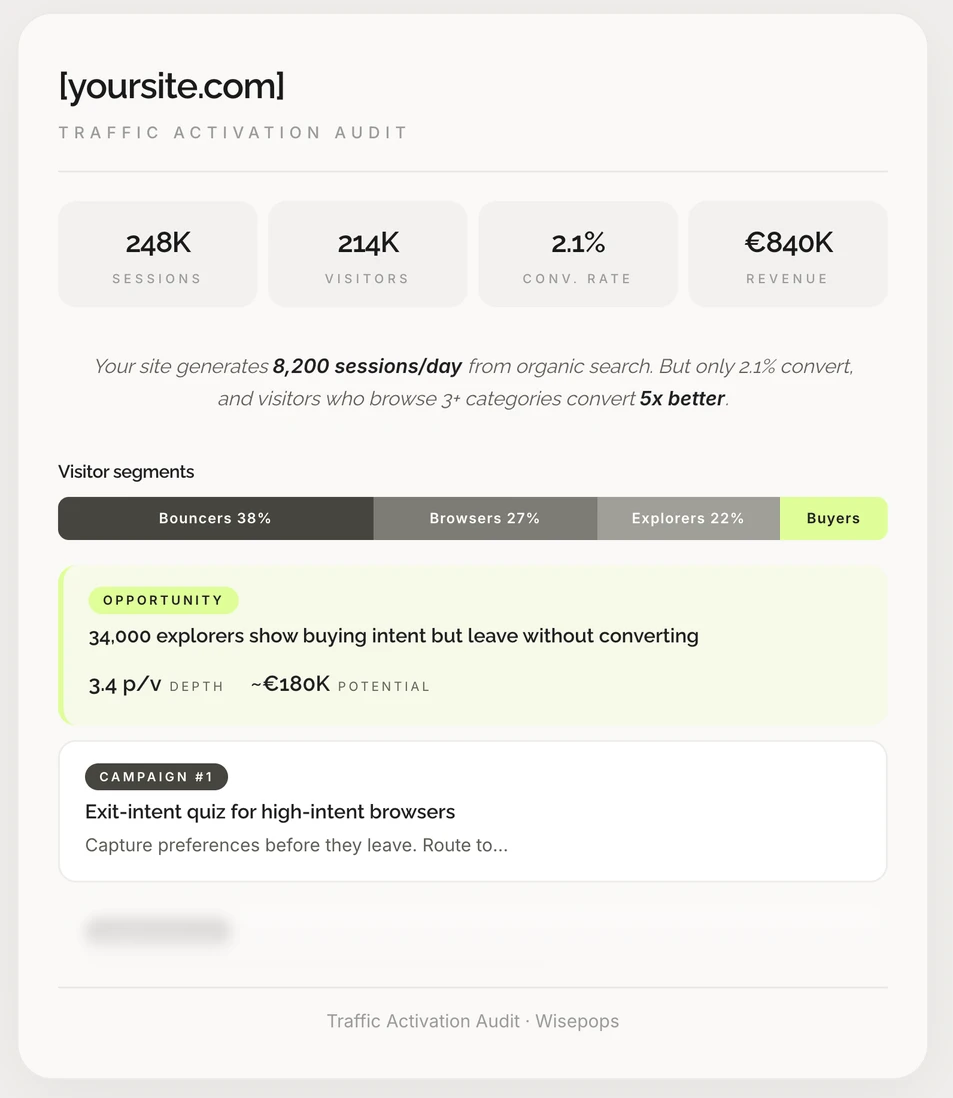
We review your traffic and show which behavioral segments you have, the campaigns that fit each one, and the revenue they could reach.
What are ecommerce AI agents?
An ecommerce AI agent is software that understands a request in plain language, reads your store data, and takes an action toward a goal. The action can be answering a shopper, updating an order, choosing which offer to show, or building a report.
Two things separate an agent from the chatbots and rules engines you already know:
An agent reads real data. Your catalog, order history, customer profiles and visitor behavior, instead of a script someone wrote last year.
An agent acts. The agent changes something (a campaign, an order, a cart, a segment) instead of only replying.
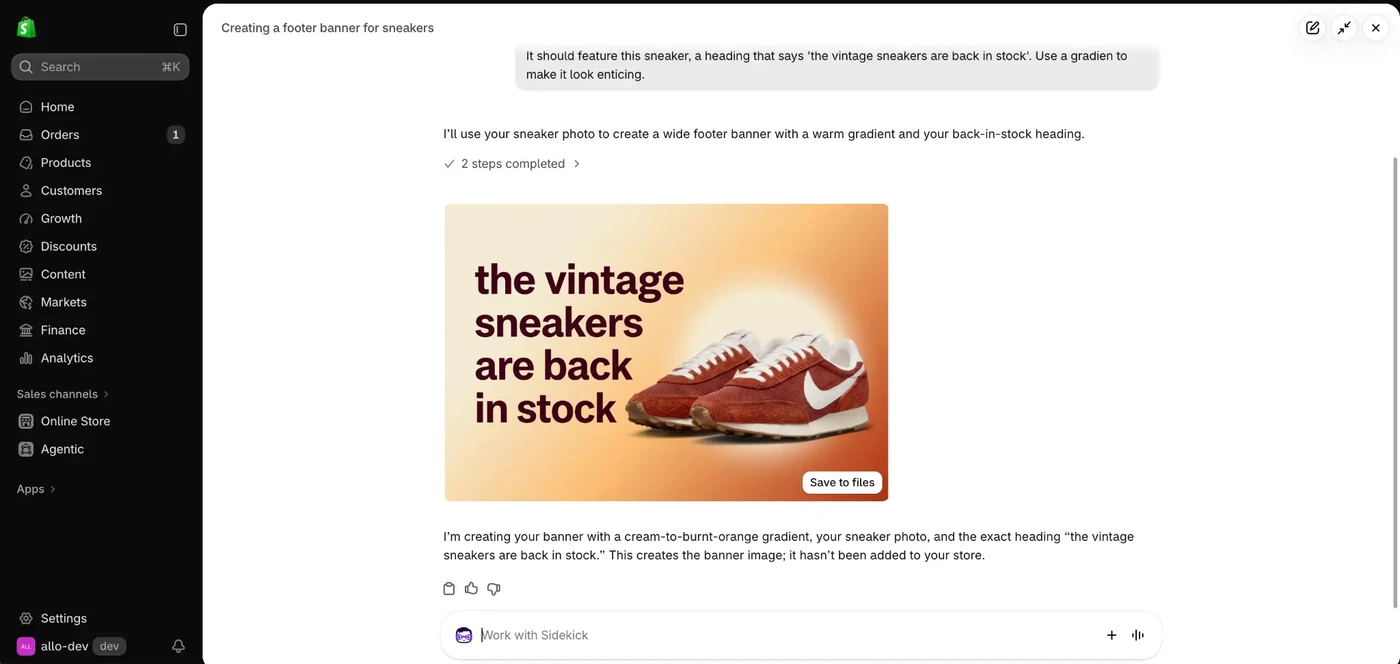
Shopify Sidekick, for example, can create a store banner from a request written in plain language:


Use cases
Ecommerce AI agents fall into two groups. Shopper-facing agents talk to your customers, while merchant-facing agents work for your team.
Here's what an agent does for each ecommerce goal:
Goal
What the AI does
Who it talks to
Where it runs
Onsite traffic conversion
Chooses the right campaign, offer or recommendation for each visitor
Shopper (indirectly)
Your site
Conversational commerce
Answers product questions and guides the choice
Shopper
Product pages, search
Support automation
Resolves “where is my order?”, returns and address changes
Shopper
Email, chat, SMS, social
Retention and loyalty
Builds campaigns, answers and re-engages customers
Shopper
Email, SMS, WhatsApp
Back-end operations
Runs reports, edits products, sets up discounts
Your team
Shopify admin
Analytics
Explains what visitors did and why
Your team
Analytics app, chat
Related:
How to choose the right AI agent
Three questions narrow the field quickly:
What's your main pain point? Conversion rate, average order value, email list growth, cost per ticket and hours spent on reporting each point to a different agent.
What data does the agent need, and is that data clean? Check whether the agent fits the tools you already use and can access your store data.
How much are you ready to invest? AI agents bill in completely different units: pageviews, unique visitors, tickets, resolved conversations, profiles, credits. Make sure you understand how each unit translates for your website.
Our selection of the best AI agents for ecommerce
We picked one tool per goal. Four of the five picks are AI agents. Wisepops, the pick for onsite traffic conversion, is a personalization platform with AI features, where every campaign is approved before it goes live.
Here's how the picks compare on price and access:
Goal
Pick
Starting price
Trial / self-serve
Onsite traffic conversion
Wisepops
From $599/mo, audit and strategy included
Demo, then 14-day free trial
Conversational commerce
Dialog
Free (200 conversations), then from $249/mo
Free trial, self-serve on Shopify
Support automation
Siena AI
No public pricing
Sales-led
Retention and loyalty
Klaviyo
Free (250 active profiles), then from $20/mo
Free plan, self-serve
Back-end operations
Shopify Sidekick
Included in all Shopify plans
Self-serve
Bonus: analytics
Shopiens
$350/mo during the beta
Waitlist, Shopify app
1. Wisepops: for onsite traffic conversion
Wisepops overview
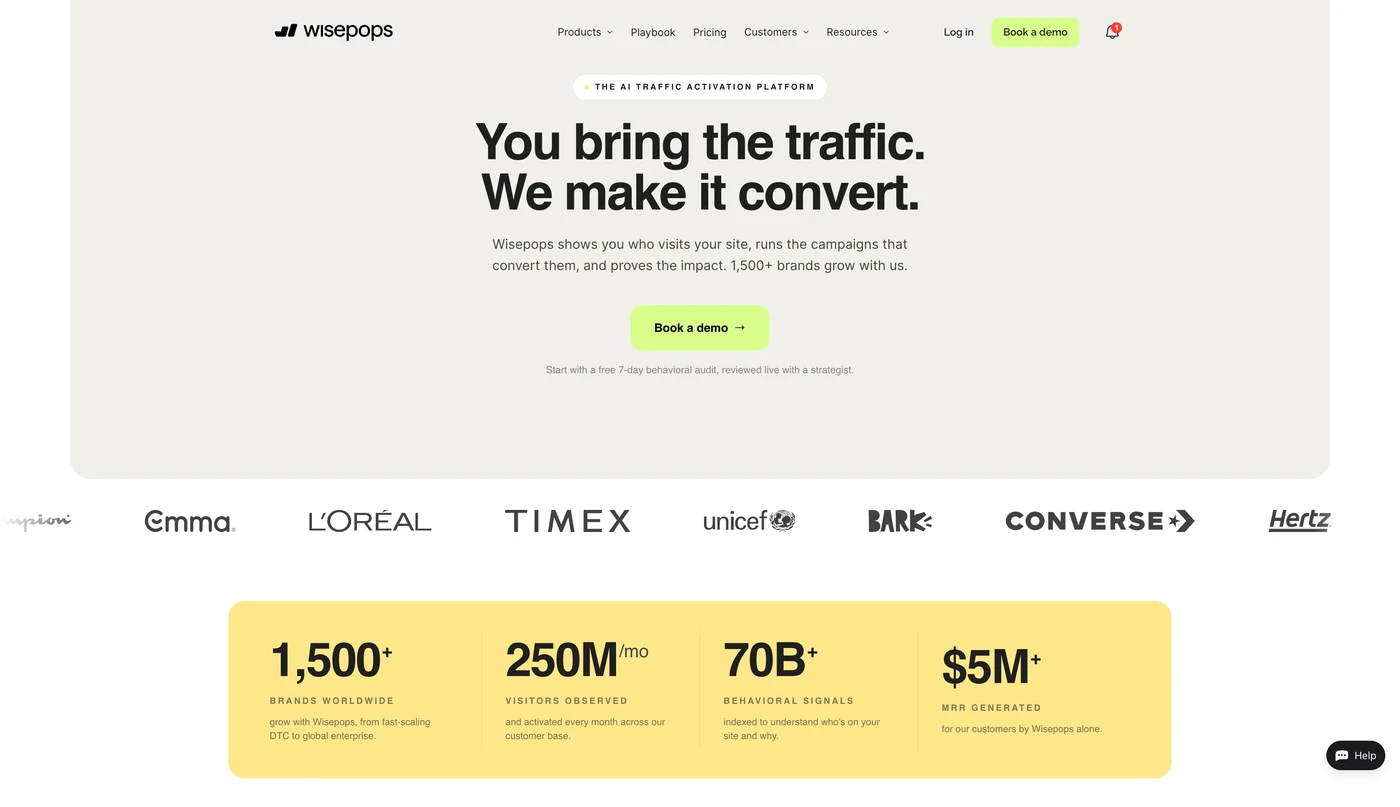
Wisepops is a personalization platform for turning the traffic you already have into leads and revenue. Each visitor sees the campaign that fits their behavior, across popups, embeds, quizzes, web push and the onsite feed.
The AI in Wisepops does three jobs for a store:
AI traffic intelligence audit. Shows which visitor segments your store has, how much revenue each one could bring, and which campaigns fit each segment. You know where to start before launching anything.
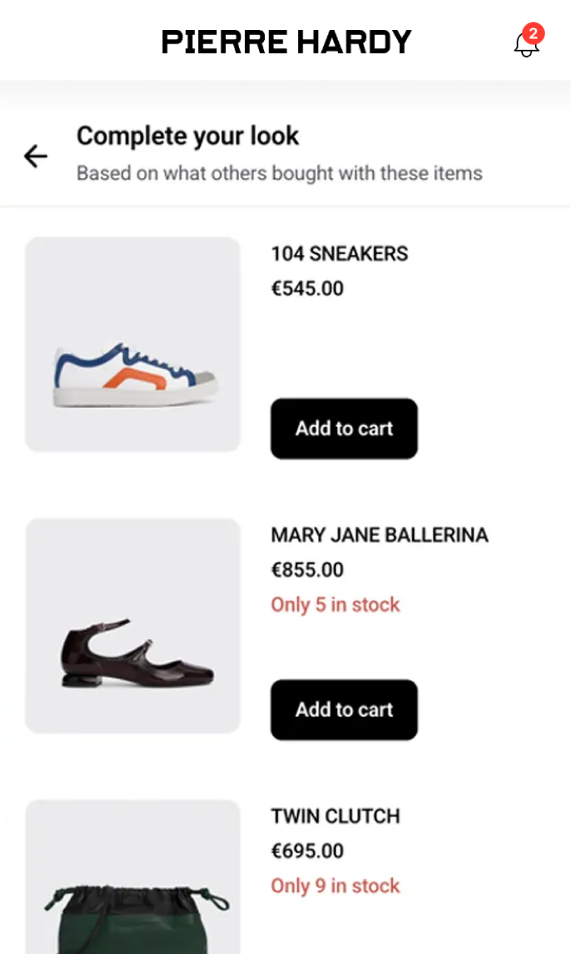
AI product recommendations (Shopify). Six strategies, including Best Sellers, Trending and Personalized Picks, show each visitor the products they're likely to buy. Lists update as sales change, with no manual merchandising.
AI cart recovery (Shopify). Predicts when a shopper with items in the cart is likely to leave, and shows the recovery offer only then. Shoppers who were going to buy check out without a discount they didn't need.
Targeting also draws on Shopify data (cart value, logged-in status, purchase history), behavior and traffic source. Built-in A/B testing and control groups show which campaigns earn money and which only claim credit for sales that would have happened anyway.
How the AI traffic intelligence audit works
Work with Wisepops starts with the audit. Within 7 days of installing the Wisepops tracker, the audit groups your visitors into behavioral segments. The audit then sizes the revenue opportunity in each segment and matches it to campaigns built for it.
The audit is personalized for each store, so this is one example of the shape it takes:
New visitors
First-time browsers
Arrive with no history and decide fast whether the brand is worth their time.
Matching campaigns
Welcome offer
Best-seller picks
High intent
Cart abandoners
Added an item, then stalled before reaching checkout.
Matching campaigns
Cart reminder
Free-shipping nudge
Returning
Returning considerers
Came back after viewing products without buying the first time.
Matching campaigns
Recently viewed pieces
Back-in-stock alert
Loyal
VIP customers
Repeat buyers with the highest order value and lifetime spend.
Matching campaigns
Early access to new drops
Private member offer
Paid traffic
Ad-referred visitors
Arrive from a paid campaign and expect the offer that ad promised.
Matching campaigns
Ad-matched welcome
Routing quiz
Price sensitive
Deal seekers
Compare and hesitate on price before committing to an order.
Matching campaigns
First-order discount
Spend-more reward
These campaigns are popular and effective, each matched to a moment in the visit:

Quiz match
A short quiz collects each shopper's preferences and routes them to the products that fit, then asks for an email.
AI product recommendations
An onsite feed shows AI recommendations based on what the visitor added to the cart, opened as they browse.
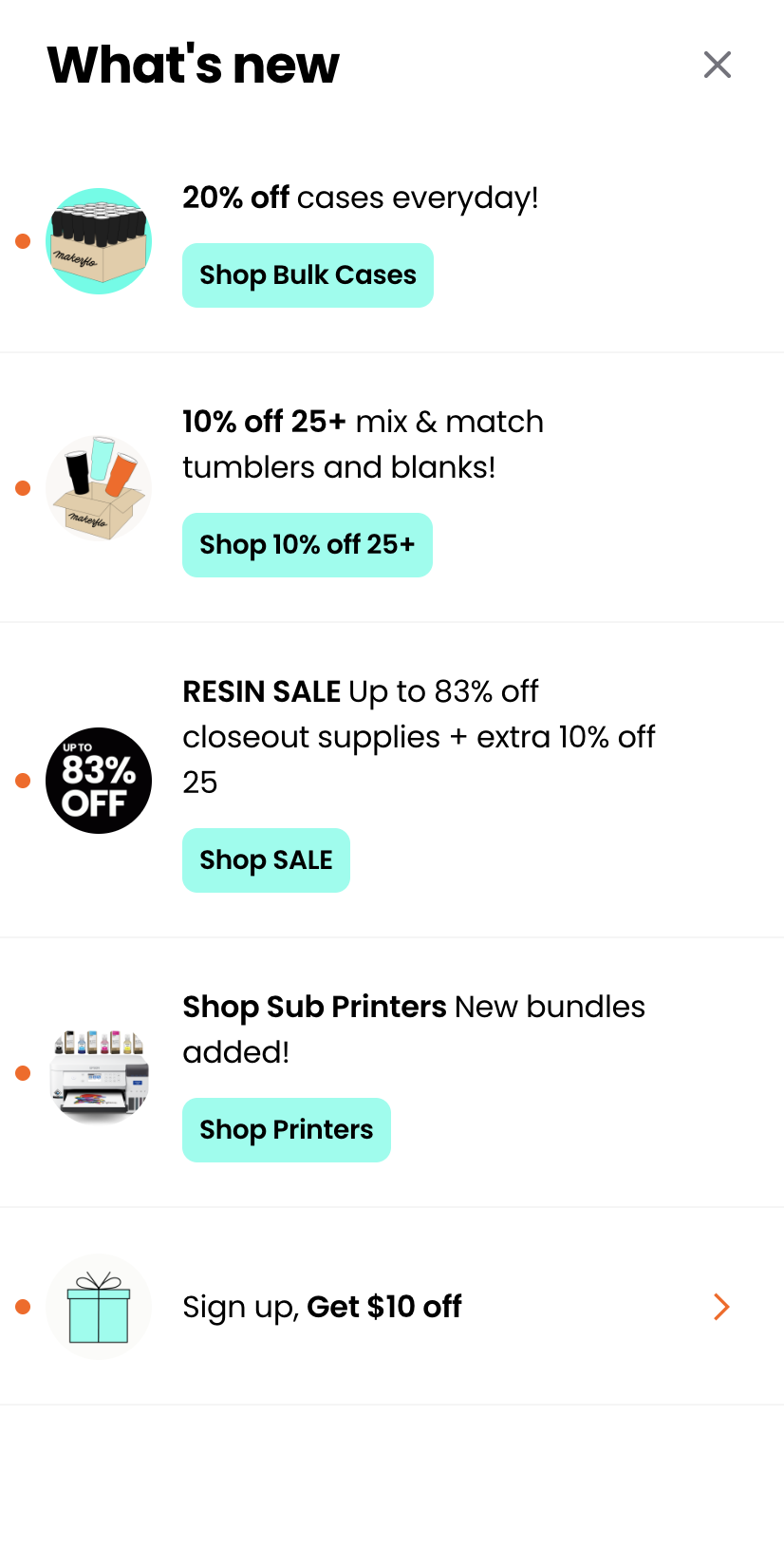
Onsite feed
An onsite feed with the latest offers and sale links, shown to returning visitors on every page without interrupting.
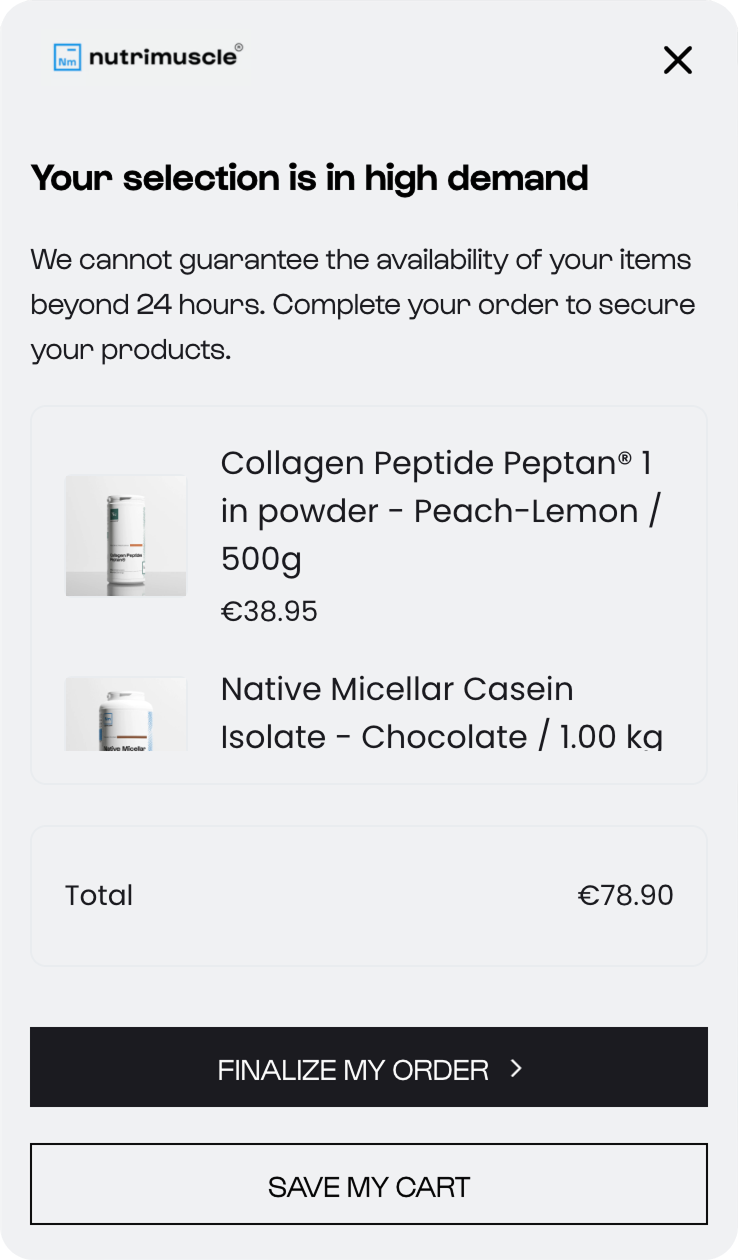
AI cart recovery
Appears when AI predicts that a visitor with items in the cart is about to leave, and brings them back to checkout.
When to pick Wisepops
Pick Wisepops when you already have meaningful traffic and the biggest opportunity is what happens during the session. That includes recommending the right products, recovering carts, and showing returning visitors a different offer than first-time visitors.
Wisepops also captures emails and phone numbers, and brings high-intent visitors back with web push. Leads captured in campaigns sync to Klaviyo, where Klaviyo's agents can use them.
Wisepops case study
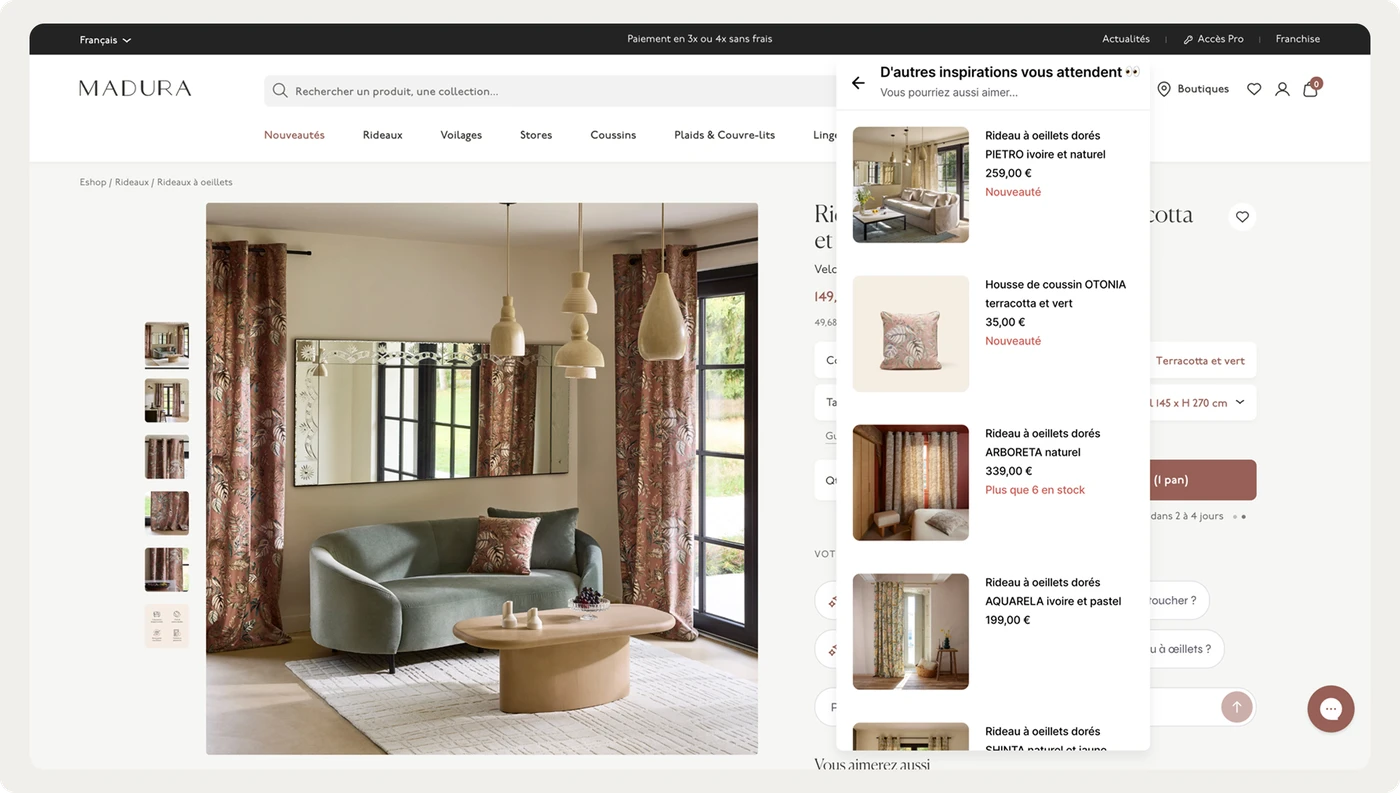
Madura, a home textile brand selling in four European markets, runs AI product recommendations in the onsite feed of its Shopify store. The feed shows best sellers and products other shoppers viewed, and reminds visitors of items they viewed recently.
Cart-based suggestions in the feed recommend pieces that match what the shopper already picked. The recommendation messages reach a click rate of around 10%, and Wisepops campaigns influence 13% of Madura's online revenue.
Here are AI product recommendations in the Madura onsite feed:
Wisepops pricing
Wisepops is a service as much as software. Plans start at $599 per month and scale with pageviews, with the traffic intelligence audit and campaign strategy included.
A 14-day free trial is set up after a demo. To see the opportunity in your own traffic first, get a free traffic audit.
2. Dialog: for conversational commerce
Dialog overview
Dialog is an AI shopping assistant that can be embedded anywhere on your store. The assistant answers the questions a good in-store salesperson would handle, compares products, and guides the shopper to a decision.
Typical questions include whether a suitcase fits in an overhead bin or whether a serum is safe to use during pregnancy. Dialog is trained on your catalog, product documentation and brand guidelines.
Beyond the product page, Dialog also runs intent-based search and a full conversational personal shopper. Re-engagement messages follow up on what the shopper asked but didn't buy.
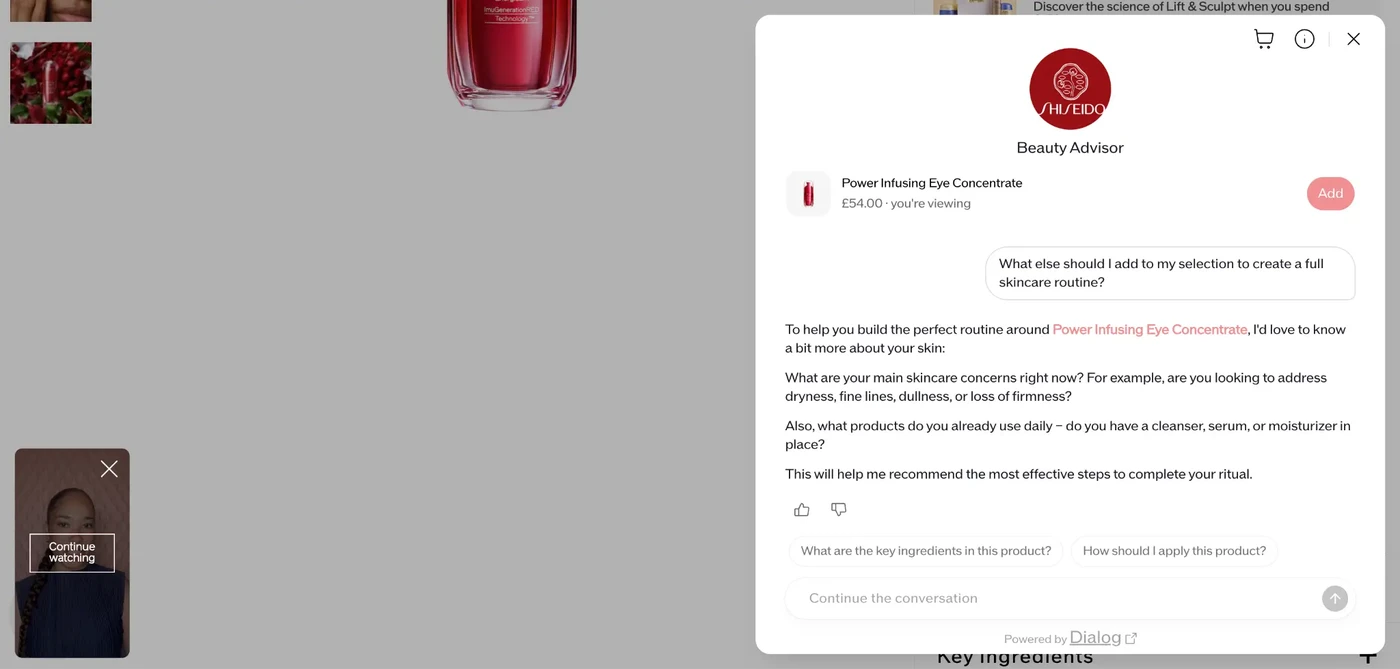
A native A/B test compares visitors who see the assistant with visitors who don't, and the conversion difference shows up in GA4. Here's Dialog running on shiseido.com:
When to pick Dialog
Pick Dialog when shoppers need to understand a product before buying it: technical gear, skincare, luggage, furniture, supplements, anything with sizes, compatibility or ingredients.
The tell is a support inbox full of pre-purchase questions, or product pages with high traffic and a low add-to-cart rate. Dialog is a weaker fit for stores with simple, low-consideration products, where shoppers rarely have a question to ask.
Dialog case study
Luggage brand Delsey Paris added Dialog to its Shopify Plus store, where the assistant answers product questions and compares models on product pages.
Across more than 155,000 conversations, Delsey reports a 7.24% add-to-cart rate for shoppers who used the assistant, according to Dialog's case study.
Dialog pricing
Dialog bills on monthly unique visitors, so you know the bill before you sign. Here are the plans:
Free: $0, 200 conversations
Starter: $249/mo, up to 25,000 unique visitors
Standard: $399/mo, up to 50,000
Scale: $799/mo, up to 100,000
Dialog offers a free trial and a self-serve install on Shopify. The assistant also supports Salesforce Commerce Cloud, BigCommerce, SAP, Spryker and Scayle.
3. Siena AI: for support automation
Siena AI overview
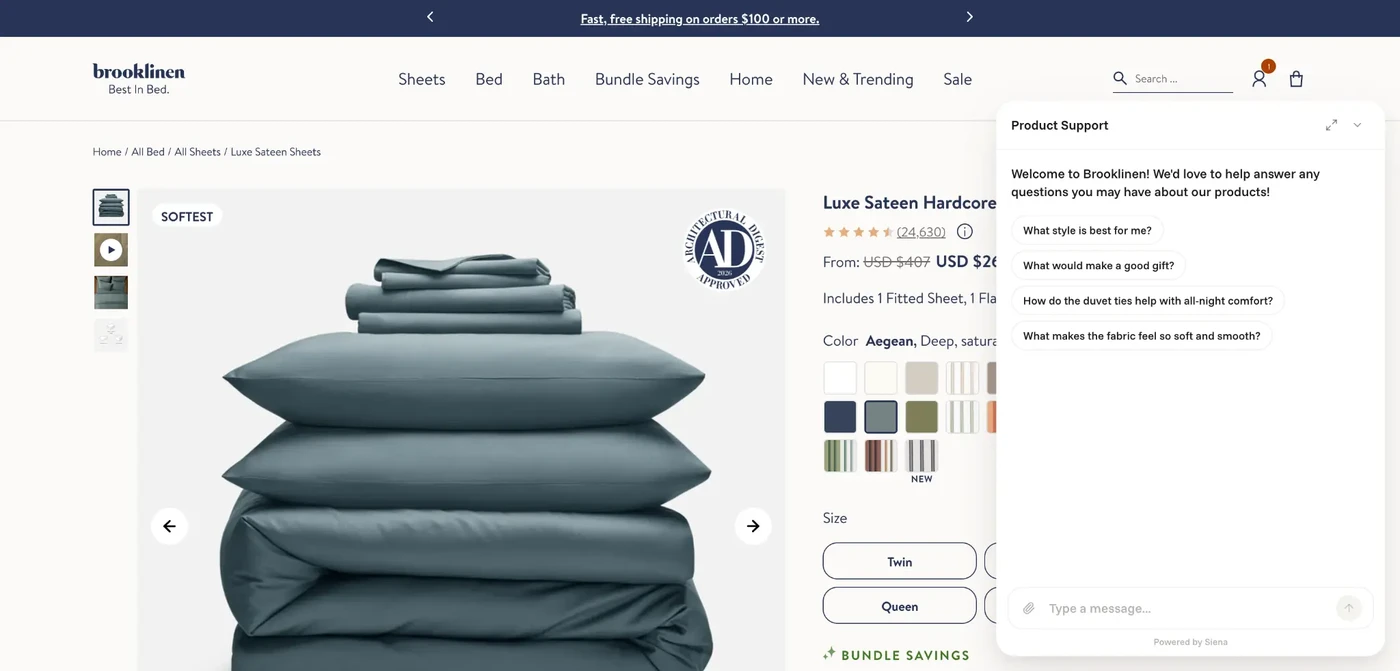
Siena AI is an autonomous customer service agent built for ecommerce. The agent sits on top of the helpdesk you already use, such as Gorgias, Zendesk, Intercom, Kustomer, Gladly or Dixa. Siena handles conversations across email, chat, SMS and social.
Siena reads order data from Shopify and asks clarifying questions when a request has several parts. The agent also makes changes in connected systems: shipping address corrections, replacements, subscription edits.
Anything Siena can't handle goes to your team with the context attached. You set the agent's tone of voice, and Siena writes in your brand's style. Here's Siena on brooklinen.com:
When to pick Siena AI
Pick Siena when ticket volume is the problem and your support team spends its days on order status, returns and address changes. In peak season, that means hiring temps or letting response times slip.
Because Siena doesn't replace your helpdesk, you can add it without migrating anything. That also means Siena is an extra line item next to the helpdesk you're already paying for.
Siena AI case study
Drinkware brand Simple Modern had six CX specialists swamped by ticket volume.
After rolling out Siena, 79% of support tickets are automated and customer satisfaction on AI replies is 98%, according to Siena's case study. The team saves 80 hours a week, roughly the capacity of two people.
Siena AI pricing
Siena doesn't publish pricing. Quotes depend on monthly ticket volume and support team size, and there's no free trial or self-serve plan.
4. Klaviyo: for retention and loyalty
Klaviyo overview
Klaviyo is an email and SMS platform built for ecommerce, and it now ships two agents:
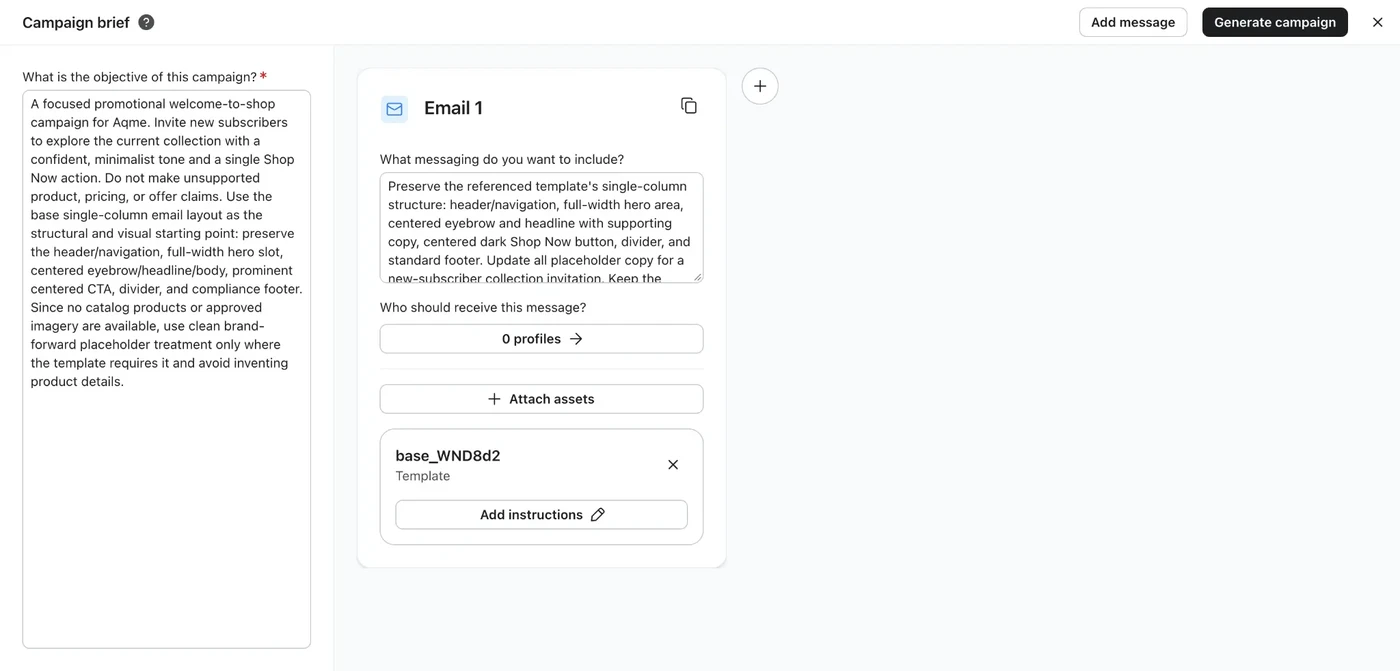
Composer builds campaigns and automations from a plain-language brief, including audience, copy per channel and timing. Nothing goes live until you approve it.
Customer Agent answers customers across chat, SMS, email and WhatsApp, recommends products, and handles returns and loyalty questions.
Both agents run on the same customer profile that powers your marketing. That's the main argument for using them: a customer asking about a return gets an answer that already knows their order history and loyalty status.
Here's Composer inside Klaviyo:
When to pick Klaviyo
Pick Klaviyo's agents when the goal is getting existing customers to buy again: win-back campaigns, post-purchase journeys, loyalty programs, replenishment reminders.
If your list is growing, Composer helps a small team ship more campaigns to it.
For high-volume support, a dedicated agent like Siena goes deeper. Customer Agent makes more sense when your support load is moderate and you want marketing and service answers grounded in one profile.
Klaviyo case study
Apparel brand Naked Wardrobe reached 86% autonomous resolution with Customer Agent within 90 days. The agent closed 86% of customer conversations without a person stepping in.
Klaviyo pricing
Klaviyo's free plan covers up to 250 active profiles and 500 email sends per month, and includes $5 of Composer usage per month. Paid email plans start at $20/month for 500 active profiles, and SMS is billed per message on top.
Composer and Customer Agent are usage-based add-ons. Composer is billed $20 per month, while Customer Agent starts at $50 per month for 75 ticket resolutions.
5. Shopify Sidekick: for back-end operations
Shopify Sidekick overview
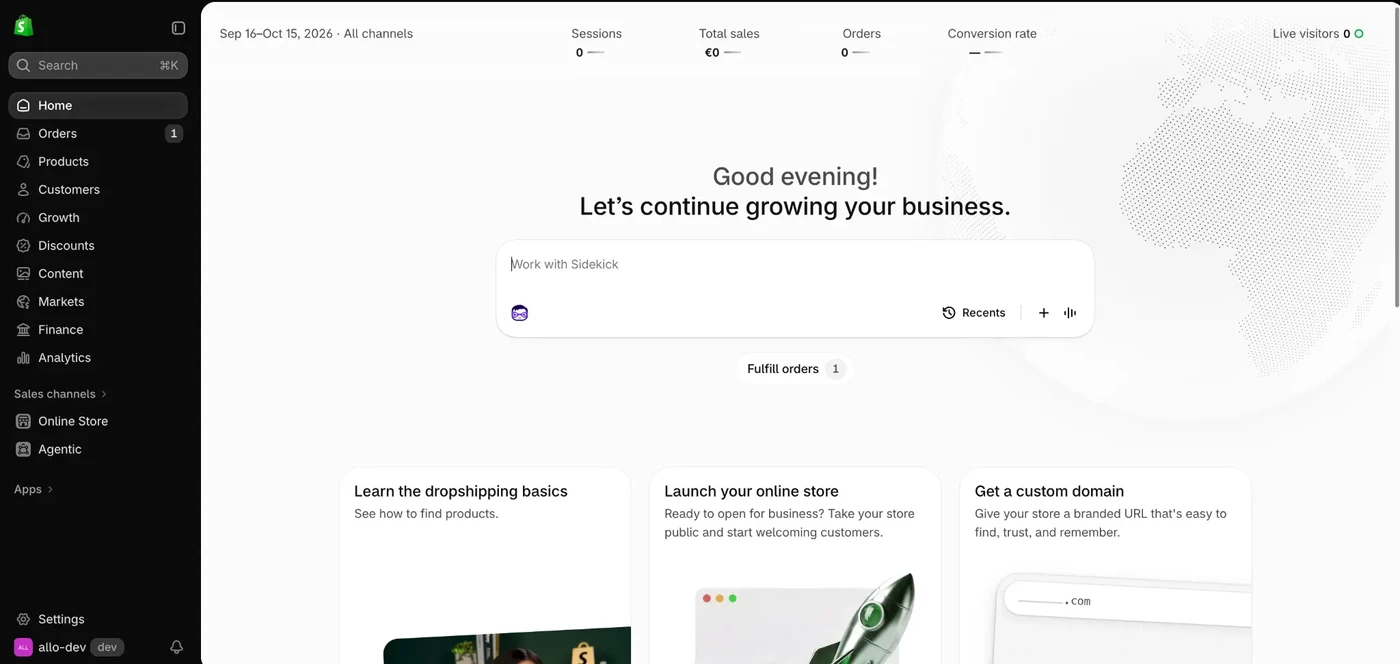
Sidekick is the AI agent inside your Shopify admin. You ask a question or give a task in plain language. Examples include “What were my top 10 sellers last month?” and “Set up free shipping over $75”.
Sidekick then reads your store data, runs the right Shopify functions, and shows you the changes for approval before applying them.
Sidekick works on desktop and mobile, with text and voice. As a merchant-facing agent, Sidekick never appears to your customers. Here's Sidekick in the Shopify admin:
When to pick Shopify Sidekick
Pick Sidekick when your team loses hours to the admin work I remember from the marketplace. That means running sales reports, building segments, writing product descriptions, setting up discounts and planning inventory.
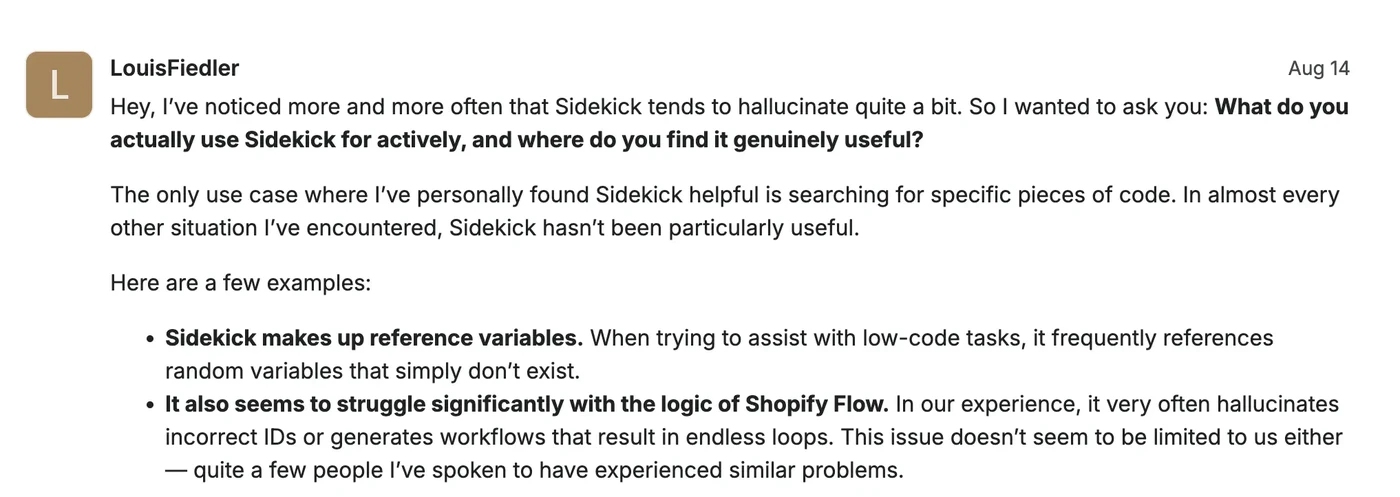
But make sure to check its output before you rely on it. Merchants on Shopify's community forum report incorrect technical answers, and anything touching prices, inventory or SEO deserves a second look.
Here's one of those reports:
Shopify Sidekick case study
Fashion brand Jaded London sells in seven international markets with a small team. The brand credits Sidekick with saving 10 to 15 hours a week on analytics requests, according to Shopify's case study.
Colleagues who used to ask the head of ecommerce for country-level sales figures now ask Sidekick directly.
Shopify Sidekick pricing
Sidekick is built into the Shopify admin at no extra cost.
Related:
Bonus: Shopiens, for understanding your shoppers
Shopiens overview
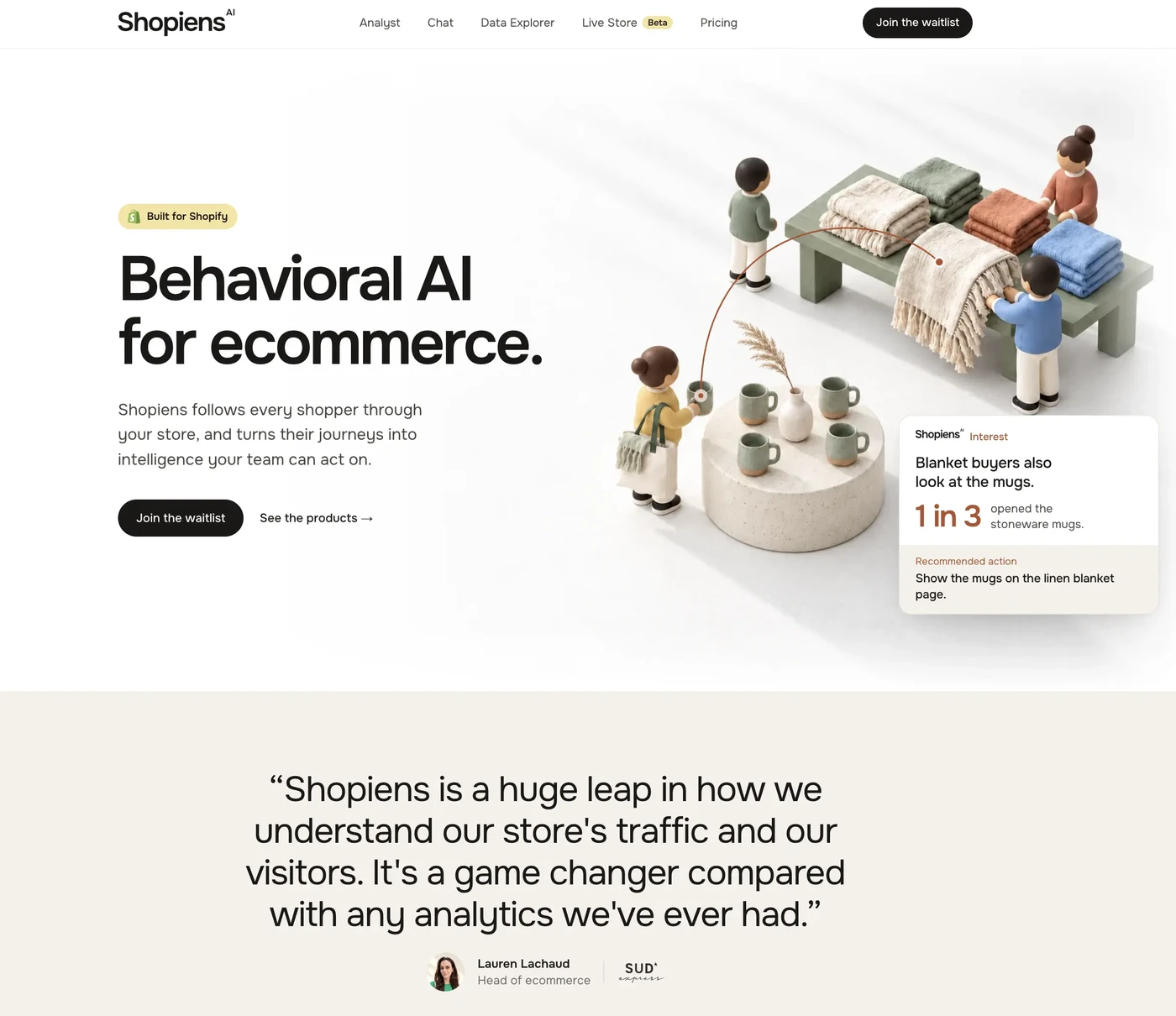
Shopiens is behavioral AI for Shopify brands. Shopiens reads every session on your store together with your Shopify orders, catalog and discounts, and your Meta and Google ads.
In Chat, you ask questions in plain language: what shoppers buy with a product, where visitors from a campaign stop, which pages lead to orders. Every answer comes with the numbers behind it.
Analyst sends a business review every week with recommended actions, and Data Explorer shows the funnel, buyers and exits for each product, channel and page.
Shopiens runs as a Shopify app, and new stores join from a waitlist. You see what visitors do and whether they visited or bought before, but never a name, an email or an address.
When to pick Shopiens
Pick Shopiens when you want to understand traffic before deciding what to do with it. Shopiens analyzes and recommends without changing your store, which makes it a natural first step before any of the agents above.
Shopiens pricing
Shopiens is in beta at $350 a month for every product, whatever the size of your store, billed through your Shopify bill. Spots are limited, and the first business review is free.
Conclusion
Here's the short version of our picks:
Choose by goal. Each pick here does a different job and reports a different metric, so a head-to-head ranking doesn't tell you anything.
Onsite traffic conversion: Wisepops, if you want more leads and revenue from the sessions you already get.
Conversational commerce: Dialog, if shoppers need answers before they add to cart.
Support automation: Siena AI, if ticket volume is eating your team's week.
Retention and loyalty: Klaviyo's Composer and Customer Agent, if repeat purchases are the goal and Klaviyo is already your email platform.
Back-end operations: Shopify Sidekick, which costs nothing extra to try on Shopify.
Understanding shoppers: Shopiens, if you want to see where visitors stop before you choose an agent.
Measure everything with a holdout. Attributed revenue and engaged-shopper conversion rates overstate results. A control group that never sees the agent is the only way to know what it earned.
Get started
in minutes
Start converting more visitors today.
Get started in minutes and see results right after.