











Read summarized version with
 ChatGPT
 Perplexity
 Gemini
 Claude
 Grok
Key takeaways
Top-ranked agency: craftberry ranks first on the evaluation criteria, with migration, design, development, CRO and maintenance handled by one in-house team.
Recommendations for integration-heavy builds: MTN Haus connects Shopify to NetSuite and Brightpearl, often through Celigo. Sunrise Integration builds custom apps and 3PL syncs, and ECommerce Partners builds B2B portals tied to NetSuite, SAP and AS400.
Recommendations by store type: Codal fits groups running several brands on one headless Shopify Plus build, and Mobikasa handles ADA and WCAG compliance inside the build. Exhibea works with luxury fashion and beauty labels, and Integriti Studio offers month-to-month help.
Key services: Shopify agencies cover store design, custom themes and apps, checkout changes and headless builds. They also run migrations from Magento, WooCommerce or BigCommerce, with 301 redirects that protect search rankings.
Integrations and work after launch: Larger projects connect Shopify to ERP, CRM, POS and 3PL systems so orders, stock and prices stay in sync. Fixes, new features, CRO and maintenance after launch usually run on a monthly fee.
How to evaluate an agency: Confirm its tier in Shopify's Partner Directory, since Shopify updates tiers every quarter. Then ask for client projects close to your size and roadmap, and check at least one with a reference call.
What to get in writing: The proposal should name who designs, codes and tests, and which system owns product, price and stock data. Terms for fixes, new features and Shopify updates after launch belong in the proposal too.
Successful Shopify stores selling a few million dollars a year need more than a theme. Replatforming, ERP connections, checkout changes and support after launch all depend on the agency you pick.
This list compares ten Shopify agencies for scaling brands by specialty, partner tier, US clients and the projects each one suits best. The sections after the list cover how to evaluate a partner, the red flags to watch for and when Shopify Plus justifies the upgrade.
In this guide:
See your segments
Match each visitor to the right campaign
We review your traffic and show which behavioral segments you have, the campaigns that fit each one, and the revenue they could reach.

How do the top Shopify agencies compare for scaling brands?
The table below compares the ten agencies by specialty, Shopify partner tier, US clients and the situation each one suits:
Agency
Specialty
Partner tier
US clients
Works best when
craftberry
All-in-one Shopify partner providing migrations, design, CRO, and more
Premier Partner
Midi Health, Doctor Mi, On Running, Pepper, vivo
A $2M+ brand wants one partner long after launch
MTN Haus
Shopify-only migrations and ERP middleware
Platinum Partner
Bandit Running, ButcherBox, Leupold Optics
A CPG brand needs NetSuite connected
ehouse
Unified commerce on Shopify Plus
Platinum Partner
Briogeo, Pearl iZUMi, Dude Wipes
A brand wants managed connectors
Sunrise Integration
ERP, CRM and POS integration
Premier Partner
Bombas, Salsa Cycles
Online, retail and B2B data must stay in sync
Codal
Headless multi-brand Shopify Plus
Platinum Partner
Cosori, Origin USA, Thermos
Several brands need one shared build
Mobikasa
Custom builds with accessibility work
Platinum Partner
Perfumania, Randolph
Accessibility is part of the brief
ECommerce Partners
B2B and ERP for wholesale sellers
Plus Partner
Chantecaille, QC Supply
A brand sells wholesale and retail
Integriti Studio
Fixed-scope projects or monthly plans
Select Partner
HD Truck Source, MxSocal
A brand wants month-to-month help
Exhibea
Principal-led luxury studio
No public tier
Holderness & Bourne, Cult Gaia
A luxury label wants founder-led design
Bowtie
Engineering-first checkout and headless work
No public tier
Work World, USA Cycling
The project is mostly engineering
Which Shopify agencies match each scaling brand's needs?
1. craftberry
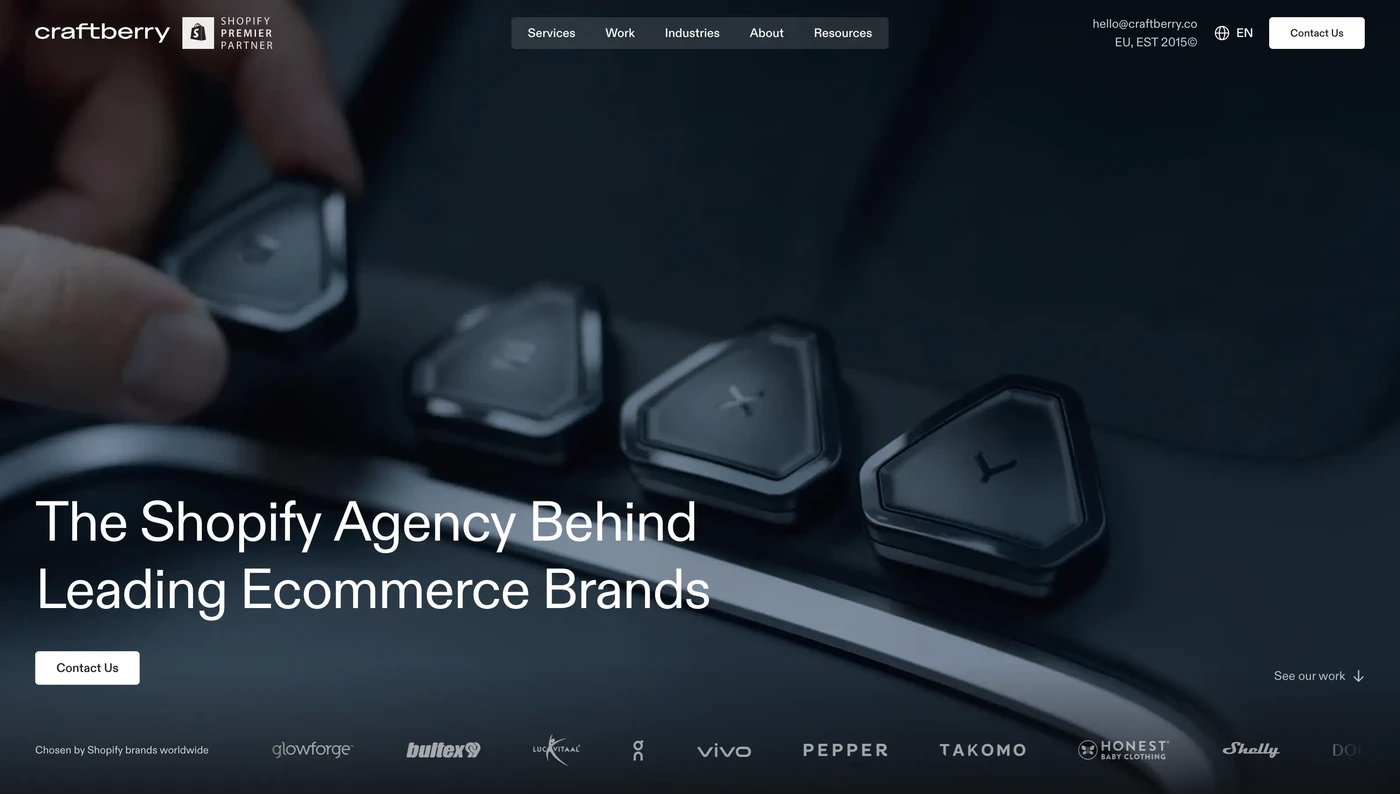
The craftberry homepage
The best Shopify agency, craftberry, is a Shopify Premier Partner for mid-sized and large ecommerce brands with $2M+ in annual revenue. craftberry's in-house team covers the whole store lifecycle: migrations from WooCommerce, Magento, Shopware and BigCommerce, UX/UI design, custom development, CRO and ongoing maintenance.
With 11+ years on Shopify and 800+ projects delivered, craftberry keeps strategy, design, development and optimization under one roof.
Best for:
Scaling brands that need custom features and integrations. craftberry works with ecommerce brands doing $2M+ a year.
US clients:
Midi Health, Doctor Mi, On Running, Pepper, vivo.
What they deliver:
Design, development, migration, and CRO are handled by one in-house team of 30+ Shopify specialists.
Recent work:
Midi Health: a custom Shopify Plus supplement store with subscriptions, launched in four weeks; Doctor Mi: a fully custom bilingual Shopify store, followed by a 14% conversion rate increase; vivo: an official Shopify rollout for Germany, Austria and Hungary, delivered in 8 weeks; Pepper: client since 2018 with 120+ projects.
Not suitable for:
Small stores that only need a quick theme install or a handful of one-off fixes, since projects are scoped for brands doing $2M+ a year.
2. MTN Haus
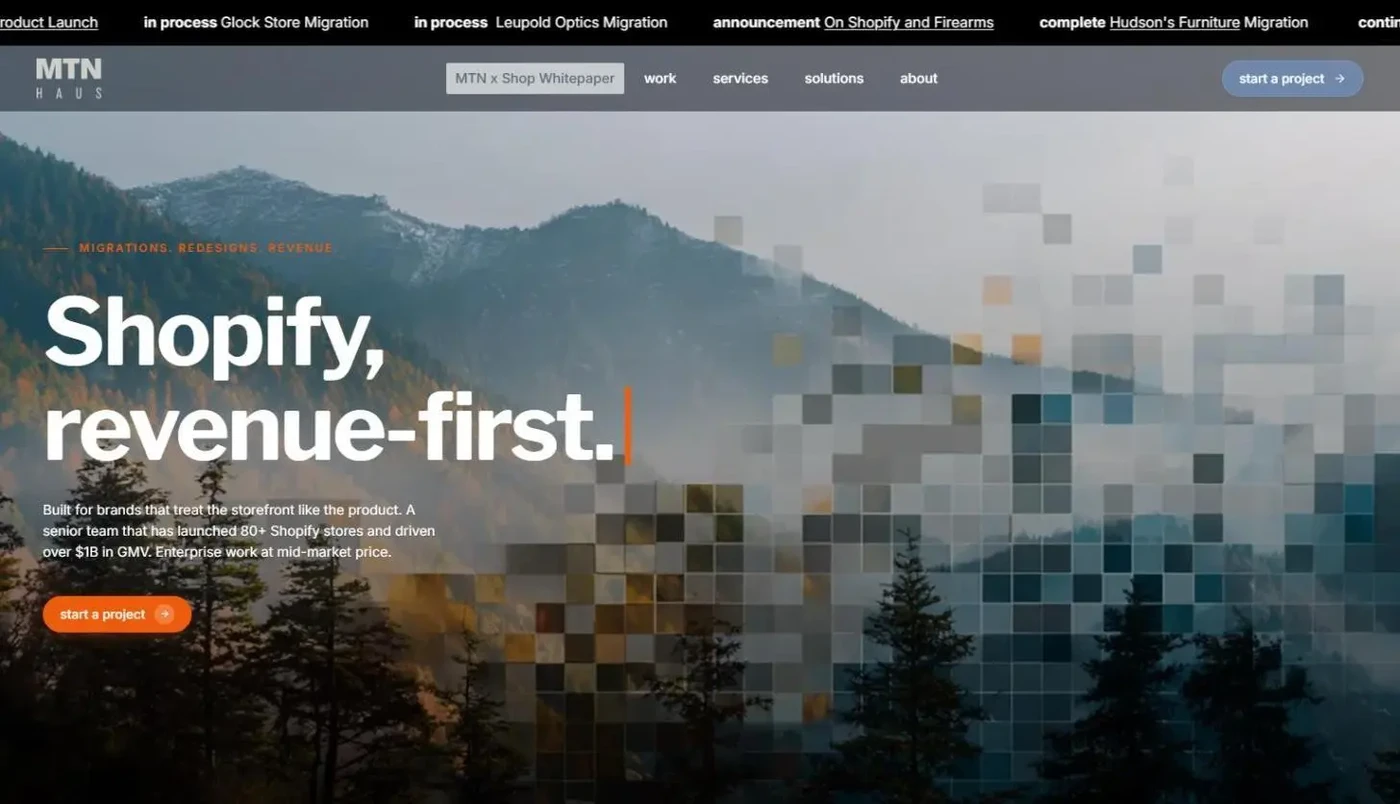
MTN Haus builds only on Shopify
Founded in 2017, MTN Haus is a Shopify Platinum Partner handling migrations, redesigns, custom development and ERP middleware for DTC and consumer packaged goods (CPG) brands. The senior-only team keeps the pitching lead in every standup. Clients include ButcherBox and Powder Mountain.
Best for:
DTC and CPG brands that need NetSuite or Brightpearl connected to their Shopify store.
US clients:
Bandit Running, Georgetown Cupcake, Powder Mountain, ButcherBox.
What they deliver:
Migrations, redesigns, custom development and ERP and middleware work, often through Celigo.
Recent work:
Powder Mountain moved from Magento to Shopify Plus in ten weeks with middleware and custom development, including its Ski Now, Pay Later program.
Not suitable for:
Anyone needing a generalist agency or a non-Shopify platform, because MTN Haus builds only on Shopify.
3. ehouse
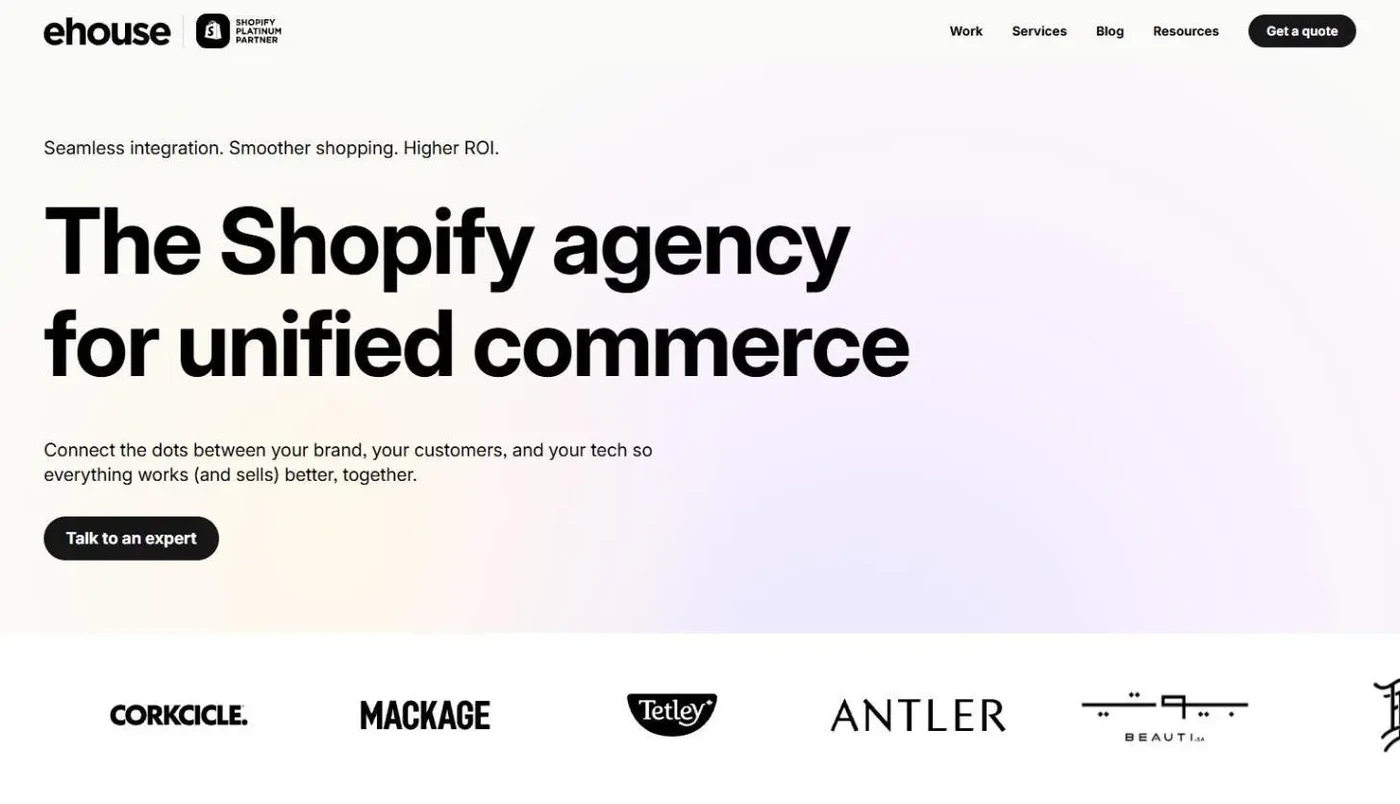
ehouse focuses on unified commerce for Shopify brands
ehouse is a Shopify Platinum Partner focused on unified commerce, covering design, development, integrations and marketing for outdoor, beauty and consumer goods brands. With 23 years in ecommerce, ehouse runs its own managed integrations platform, expanded through its merger with Commerce12 and its purchase of VL OMNI. Its projects include Briogeo.
Best for:
Multi-channel brands that want store design, development and back-office connectors maintained by one company.
US clients:
Briogeo, Pearl iZUMi, MegaFood, Dude Wipes.
What they deliver:
Design, development and marketing on Shopify Plus, plus integrations running on pre-built connectors.
Recent work:
Briogeo received a modular headless Shopify Plus build with Pack Digital, with 12 content modules the brand edits without developers.
Not suitable for:
Projects below roughly $50,000, the minimum budget ehouse lists in the Recharge partner directory.
4. Sunrise Integration
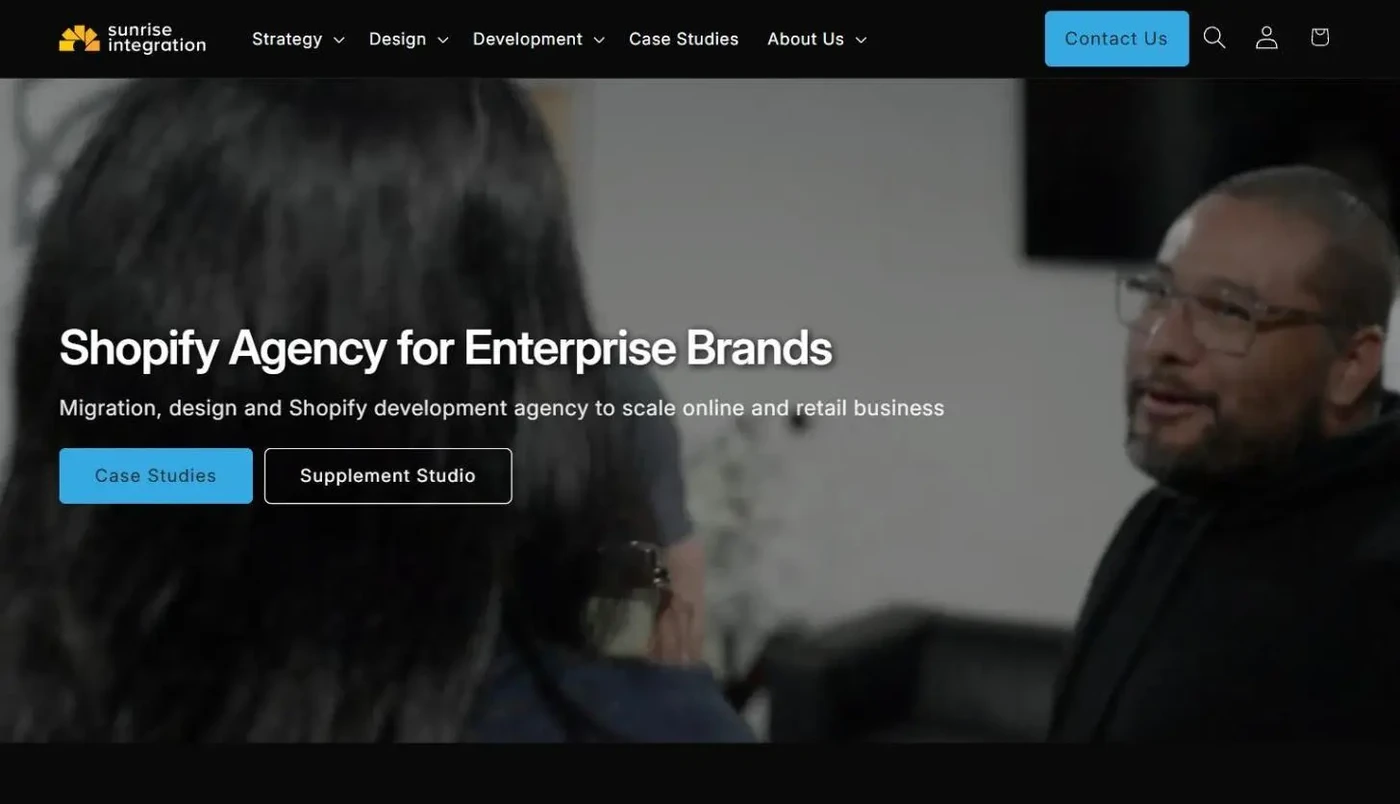
Sunrise Integration works on migrations and integrations for enterprise brands
Integration work is the core of Sunrise Integration, a Shopify Premier Partner since 2014 that builds ERP and CRM (customer relationship management) syncs, logistics links and Shopify POS apps for enterprise merchants. Its projects include Bombas and Salsa Cycles.
Best for:
Enterprise merchants selling online, in stores and through B2B who need inventory and ERP data in sync.
US clients:
Bombas, Salsa Cycles, Disney/Marvel, Live Nation.
What they deliver:
Custom API work between Shopify and ERP or CRM systems, plus migrations and Shopify POS for retail stores.
Recent work:
Bombas got custom Shopify apps for inventory and product bundles, plus a real-time API sync with its 3PL warehouse. Salsa Cycles migrated to Shopify with a new design, opening up direct-to-customer sales.
Not suitable for:
Brands looking mainly for brand design or marketing, since Sunrise Integration focuses on APIs, apps and system integrations.
5. Codal
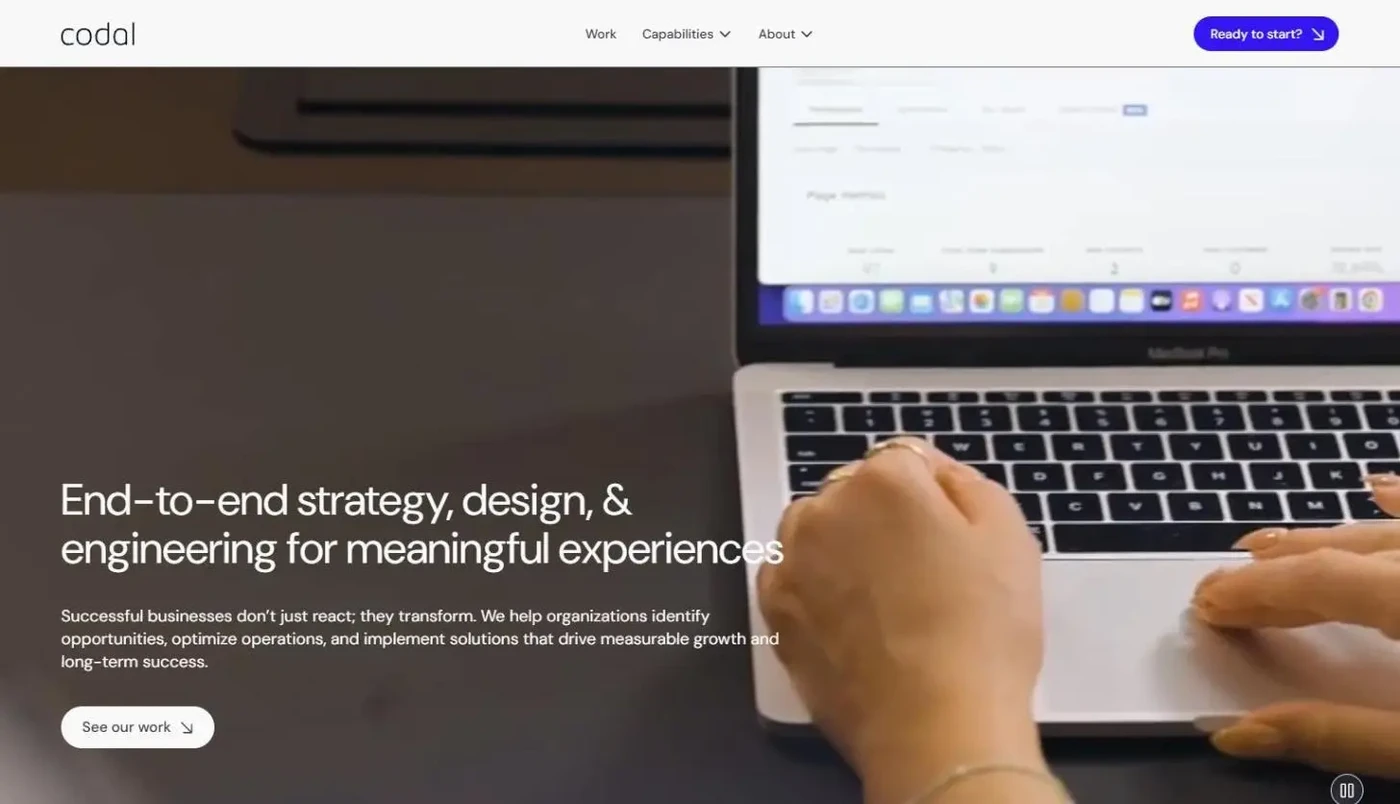
Codal covers strategy, design and engineering
Codal is a technology consultancy, founded in 2009, whose Shopify practice covers replatforming, Shopify POS, Hydrogen headless builds and ERP integration for mid-market and enterprise brands. The firm became a Shopify Platinum Partner in 2025 and runs its own ecommerce accelerators for faster launches. Its case studies include Cosori.
Best for:
Mid-market and enterprise groups merging several brands or adding a headless front end on Shopify Plus.
US clients:
Cosori, Levoit, Etekcity, Origin USA, Thermos.
What they deliver:
Strategy, design and engineering, including Hydrogen builds (Shopify's headless framework) and ERP or CRM connections.
Recent work:
Cosori, Levoit and Etekcity moved from a monolithic platform to one headless Shopify Plus build with Builder.io, shared across the three brands.
Not suitable for:
Brands that want a Shopify-only shop, as Codal also builds on BigCommerce and fully custom platforms.
Related:
6. Mobikasa
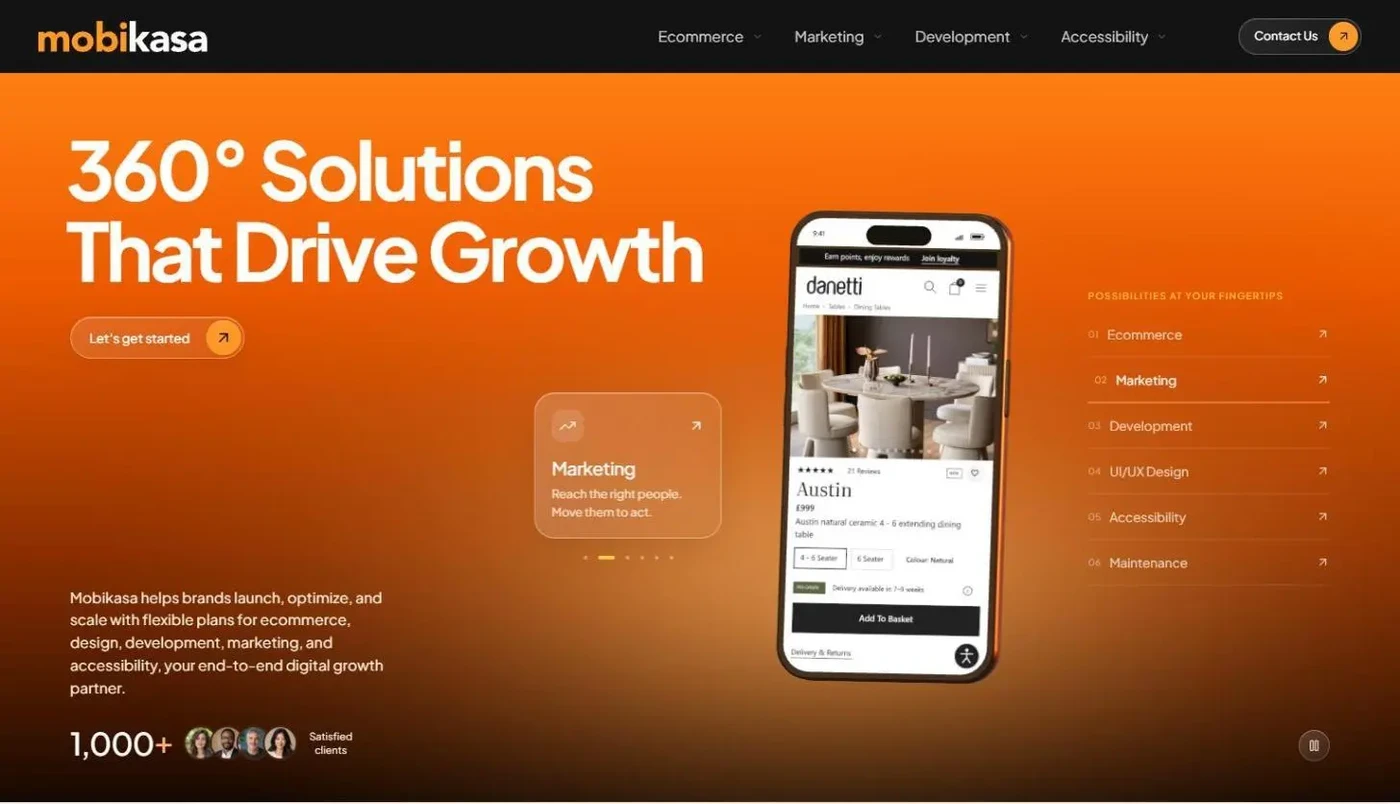
Mobikasa lists accessibility among its core services
Accessibility is built into the Shopify work at Mobikasa, an ecommerce design, development and marketing agency serving B2B and B2C brands. Mobikasa bundles ADA (Americans with Disabilities Act) and WCAG accessibility compliance with development. Mobikasa is a Shopify Platinum Partner, and its projects include Perfumania.
Best for:
Retail and consumer brands that want accessibility compliance handled inside the build.
US clients:
Perfumania, Randolph.
What they deliver:
Custom Shopify and Shopify Plus builds, migrations, ERP, CRM and POS integrations and marketing support.
Recent work:
Perfumania moved to Shopify 2.0 with its design kept, plus mobile navigation fixes, accessibility work, ongoing CRO and an integrated loyalty program. Randolph moved to a custom Shopify 2.0 build with accessibility fixes.
Not suitable for:
Merchants looking for a Shopify-only specialist, since Mobikasa also builds on Magento, WooCommerce and BigCommerce.
7. ECommerce Partners
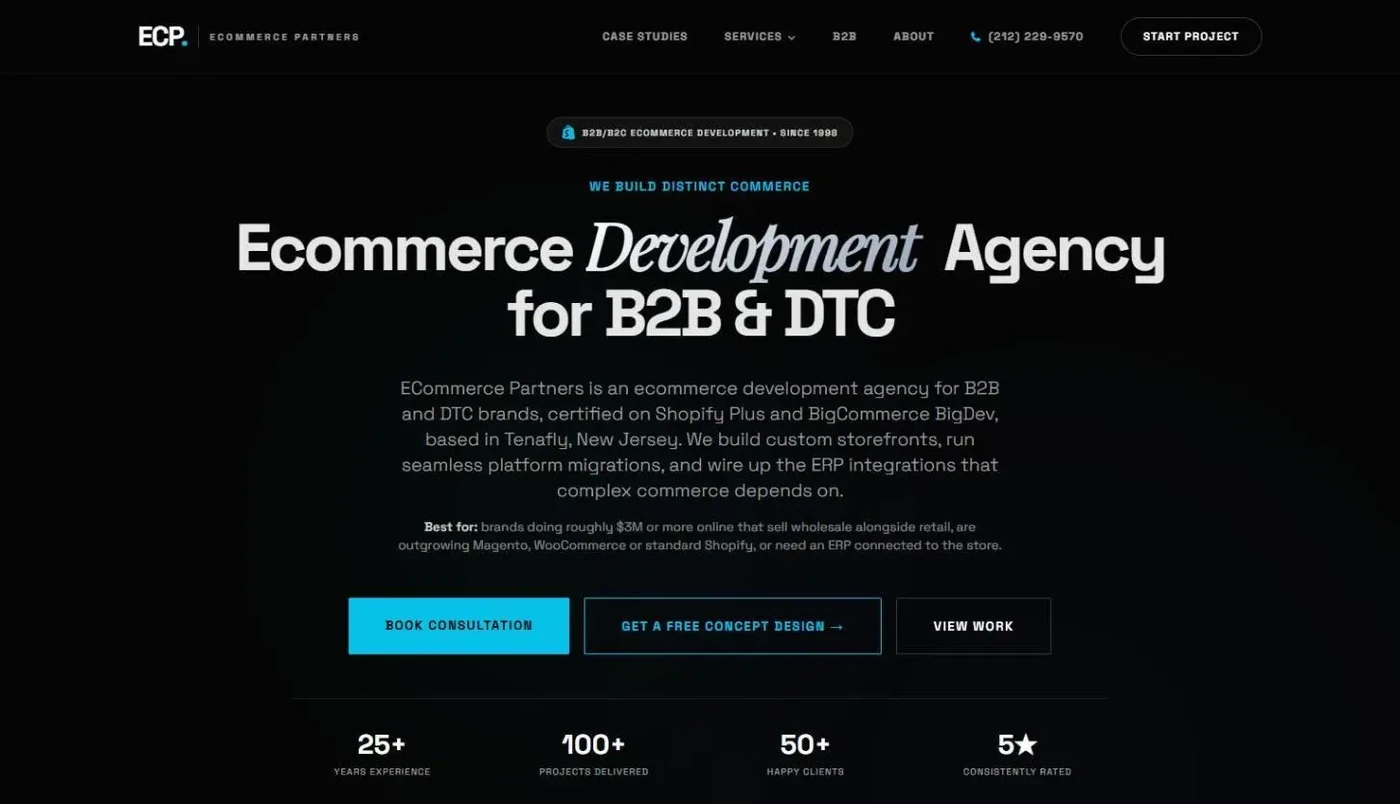
ECommerce Partners builds for B2B and DTC brands
Since 1998, ECommerce Partners (ECP) has built Shopify Plus stores, B2B portals and ERP integrations for brands that sell wholesale alongside retail. The team works with NetSuite, SAP and AS400, and built the B2B Pro Portal app for Shopify. Its projects include QC Supply and KOL Foods.
Best for:
Wholesale and retail sellers outgrowing Magento, WooCommerce or standard Shopify.
US clients:
Chantecaille, QC Supply, Sabon, KOL Foods.
What they deliver:
B2B portals, platform migrations, ERP integration and Shopify Plus custom development, plus BigCommerce builds.
Recent work:
QC Supply moved from Magento to Shopify Plus with 50,000+ SKUs and a custom B2B portal. KOL Foods got an AS400 ERP integration with real-time pricing on BigCommerce.
Not suitable for:
Companies well below roughly $3M in online sales, since ECP builds for brands at that size or larger.
8. Integriti Studio
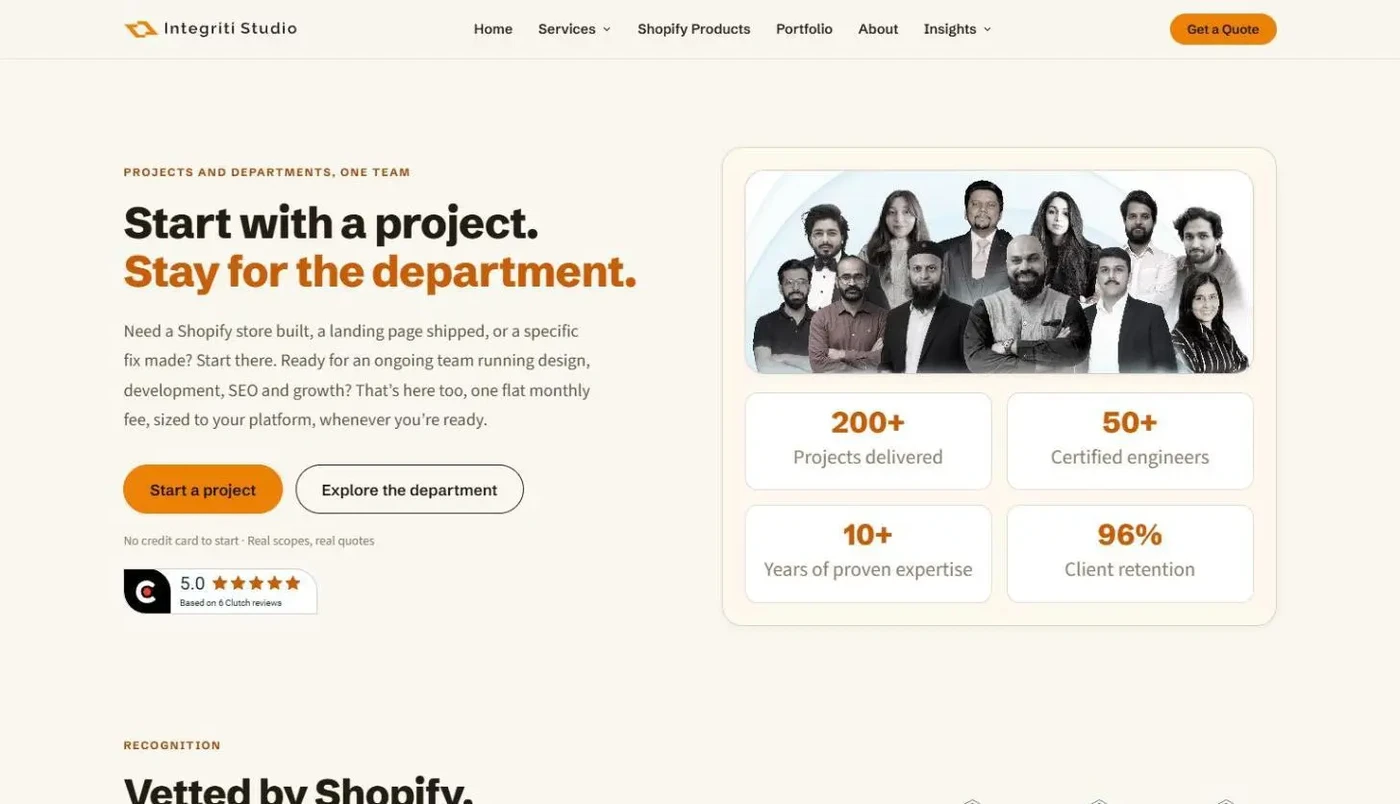
Integriti Studio offers fixed-scope projects or ongoing monthly help
Integriti Studio, a Shopify Select Partner, builds Shopify and WordPress sites and connects Shopify to ERP, 3PL (third-party logistics) and B2B systems. You can hire the studio for a fixed-scope project or "rent the department" month-to-month. Its builds include HD Truck Source.
Best for:
DTC and wholesale brands that want ongoing Shopify help without a long contract.
US clients:
HD Truck Source, MxSocal, NY Car Service, Shop Luxe Home.
What they deliver:
Builds on Shopify and Shopify Plus, plus ERP, 3PL and B2B integrations, maintenance, CRO and SEO.
Recent work:
HD Truck Source received a custom Shopify store for truck parts with advanced filtering and predictive search, followed by a 32% increase in online orders.
Not suitable for:
Brands that want a studio working only on Shopify, because Integriti Studio also builds WordPress sites.
9. Exhibea
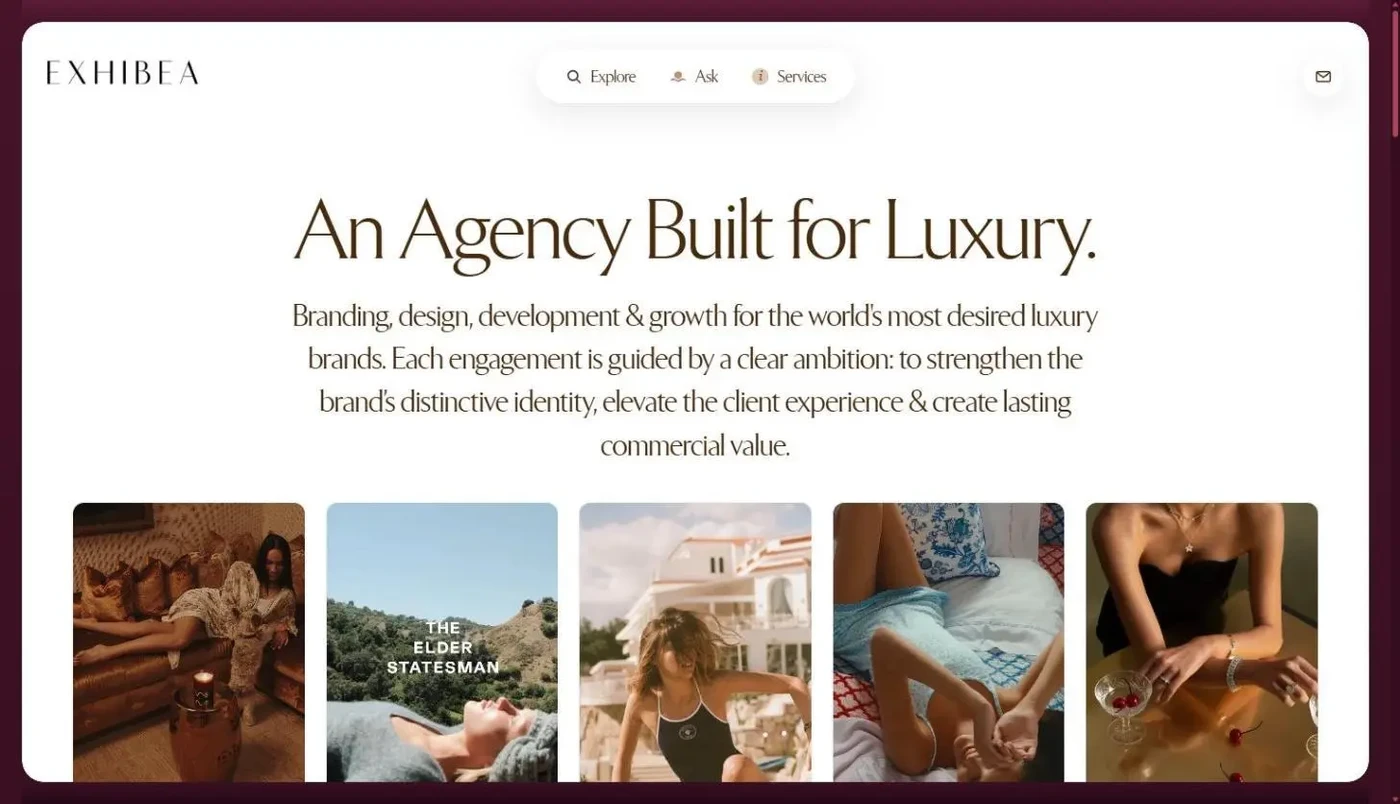
Exhibea works with luxury, fashion and lifestyle brands
Luxury, fashion and lifestyle brands are the focus of Exhibea, a principal-led studio founded in 2014 that handles Shopify strategy, design, development and merchandising for clients in the United States and abroad. Founder Bita Shahian works directly on creative direction. Its projects include Holderness & Bourne.
Best for:
Luxury fashion, jewelry and beauty labels that want founder-level creative direction.
US clients:
Sporty & Rich, Cult Gaia, Holderness & Bourne, Sunday Riley.
What they deliver:
Strategy, design, development and merchandising on Shopify, with monthly support available.
Recent work:
Holderness & Bourne moved to Shopify Online Store 2.0 with Algolia search, fabric filters, gift messaging and an upsell cart. Its mobile conversion rate then rose 18%.
Not suitable for:
Brands outside fashion, jewelry, beauty and lifestyle, since Exhibea's portfolio centers on those categories.
10. Bowtie
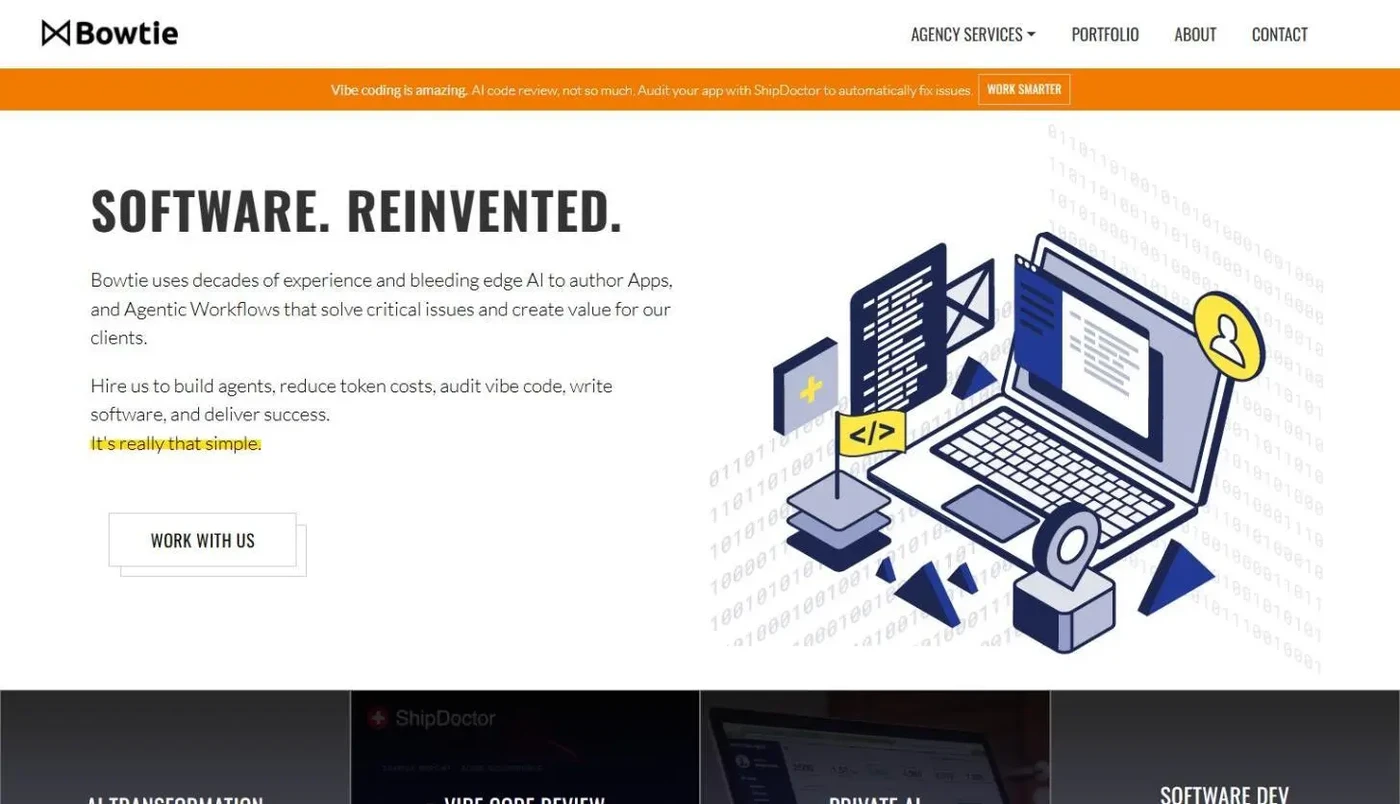
Bowtie is a software studio with a dedicated Shopify practice
Engineering comes first at Bowtie, a software studio whose Advanced Shopify practice covers Shopify Plus, headless builds, custom checkout and ERP integration. Bowtie also builds apps and AI tooling. Clients include Work World and USA Cycling.
Best for:
Brands needing extra engineers or complex checkout work more than visual design.
US clients:
Work World, USA Cycling, Alpine Provisions, NFL.
What they deliver:
Headless stores, custom checkout, ERP integration and team augmentation.
Recent work:
Work World got Shopify Plus development with custom checkout and a NetSuite ERP integration, and USA Cycling got a headless Shopify build.
Not suitable for:
Retailers after a design-led Shopify agency, because Bowtie is engineering-first with Shopify as one practice.
How were these Shopify development agencies evaluated?
Each agency was scored on six criteria, using its client projects, its services and its Shopify Partner Directory listing. Every agency on the list had to show custom Shopify or Shopify Plus work for brands selling in the United States.
Partner status: Each tier was checked in Shopify's Partner Directory, where Exhibea and Bowtie have no public tier.
Custom development depth: Agencies needed work beyond theme installs, such as checkout, apps or headless builds.
Integration and replatforming record: Client projects had to show ERP, middleware, POS or migration work.
US clients: Each agency had to show work for brands selling in the United States.
Post-launch model: Monthly support plans or ongoing development after launch counted in an agency's favor.
Clear scope: Agencies that say which brands they work with, by size or category, scored higher on clarity.
Full project fees come from a proposal, though some Partner Directory profiles show starting prices, such as $5,000 for a Mobikasa store build. Shopify updates partner tiers every quarter, so check the current tier before you sign.
How should a scaling brand choose a Shopify development partner?
Match each agency's client projects to your own roadmap, then check references and the plan after launch. craftberry, for example, lists Pepper as a client since 2018 with 120+ projects, the kind of long relationship a reference call can confirm.
What should a first call with Shopify experts cover?
Cover your business goal, the systems your store must connect to, who does the work and what happens after launch. You'll get clearer proposals for custom Shopify development if you share your current apps and internal team capacity up front.
Team makeup: The agency names who designs, codes and tests, and whether freelancers join.
Comparable projects: The agency shares client projects close to your size.
Post-launch terms: The proposal states how fixes, new features and Shopify updates are handled.
Internal workload: You learn how much staff time reviews will take.
Which Shopify integrations and replatforming questions matter most?
Ask about data ownership, sync timing, old URLs and connector upkeep after launch. An ERP link touches orders, stock and pricing, so you need to know how sync errors are caught before customers see them.
Sync direction: The plan states which system owns product, price and stock data.
Middleware choice: The plan names a tool such as Celigo or a custom connector.
Redirect plan: Old URLs map to 301 redirects (permanent forwards to new URLs), which protect search rankings.
Data migration: The scope lists which customer, order and review records move to Shopify.
What should your development partner support for onsite marketing?
Your marketing team will keep launching popups, embedded forms and A/B tests to increase your Shopify conversion rate long after launch. Ask how the agency builds your theme so you can run those campaigns without filing a developer ticket each time.
Campaign placements: The theme has sections where you can add embeds, bars and popups without code changes.
Speed with tools loaded: The agency tests page speed with your onsite marketing scripts running, as well as on a clean theme.
Testing access: You can A/B test offers and page content without waiting for a developer sprint.
Revenue tracking: The proposal names who owns event tracking and analytics configuration, so campaign revenue shows up correctly in your reports.
What red flags should brands spot when hiring Shopify developers?
Watch for a tier you cannot confirm, no client names, no plan after launch and a theme-only portfolio pitched for custom work. Clear scope limits are a good sign; craftberry, for example, works with ecommerce brands doing $2M+ a year.
Unconfirmed tier: The claimed tier does not match the agency's Partner Directory listing.
No client names: Case studies say "a leading apparel brand" instead of names you can check.
No post-launch plan: The proposal ends at launch with no terms for fixes or updates.
Theme-only portfolio: Every example is a lightly edited theme, yet the pitch promises ERP work.
Hidden handoffs: Work goes to outside contractors without you being told.
When does Shopify Plus development justify the upgrade?
Upgrade when you need apps that change core checkout steps, company-specific B2B catalogs, deposits or several regional stores. craftberry's SiFly project, two international stores with a custom ERP integration, shows the multi-store side of that decision.
Which checkout customizations need Shopify Plus?
Apps that change the information, shipping and payment pages need Shopify Plus, according to the Shopify Help Center. On Basic and higher plans, you still get the checkout and accounts editor, plus apps on the thank-you and order status pages.
When does B2B on Shopify need the Plus plan?
You need Plus for B2B when you want catalogs assigned directly to companies, or deposits and partial payments. B2B itself runs on Basic, Grow, Advanced and Plus, but non-Plus plans are limited to 3 active catalog assignments.
The Shopify Help Center guide to B2B features by plan sets out those limits. Store structure is the other trigger: Shopify Plus includes 9 expansion stores, up to 200 locations and unlimited staff accounts, per the Shopify Help Center.
What do brands ask before hiring a Shopify agency?
Before you hire, you'll likely want to know which agency fits mid-sized stores, how agencies compare with in-house developers, what custom services include and how to confirm partner status. The short answers below draw on the ranked list and Shopify's own documentation.
What is the best Shopify agency for mid-sized brands?
craftberry ranks first for mid-sized stores, since it works with ecommerce brands doing $2M+ a year and has US clients including Pepper, Glowforge and Midi. If you have heavy ERP needs, also compare MTN Haus and ECommerce Partners.
Which are the top Shopify development agencies in the US?
Ranked for scaling brands, they are craftberry, MTN Haus, ehouse, Sunrise Integration, Codal, Mobikasa, ECommerce Partners, Integriti Studio, Exhibea and Bowtie. Each one has US clients you can check, and the right pick depends on your project's main need.
Which is better, a Shopify agency vs in-house developers?
An agency is usually the better choice for replatforming, integrations and design-heavy projects, while in-house developers make sense once you have steady daily Shopify work. You can also combine both, with an agency owning large builds and an internal developer handling small fixes.
What does a Shopify agency do?
A Shopify agency designs, builds and maintains Shopify stores, including custom themes, apps, checkout changes, platform migrations and links to ERP, CRM and logistics systems. On this list, craftberry, Mobikasa and Integriti Studio also handle CRO, and ongoing development after launch usually runs on a monthly fee.
What are custom Shopify development services?
Custom Shopify development is build work that goes past standard themes and apps, such as custom theme sections, private apps, checkout extensions, headless stores and back-office integrations. You usually need it once off-the-shelf apps start to conflict or slow your store.
How can a US brand verify a Shopify agency's partner status?
Search the agency's name in Shopify's Partner Directory and compare the tier on its profile with the tier claimed on its website. The featured work on that profile also helps confirm recent Shopify work.
Get started
in minutes
Start converting more visitors today.
Get started in minutes and see results right after.